Our Happy
Authors


A Comprehensive Guide for Authors
One of the first questions authors ask when planning a children's book is, "How much does children's book illustration cost?" The answer is not always straightforward because professional illustration costs depend on much more than the number of pages. Factors such as illustration style, character design, background detail, storytelling requirements, revision stages, publishing preparation, and the type of illustration provider all influence the final budget.
Many authors begin by comparing per-page illustration pricing, but that represents only one part of the overall investment. A complete picture book illustration project includes planning the visual story, developing consistent characters, creating sketches and final artwork, designing the cover, coordinating the interior layout, and preparing publishing-ready files. Understanding both per-page pricing and full project costs helps authors budget more accurately and avoid unexpected expenses.
This guide explains how children's book illustration costs are calculated, how professional illustration companies determine pricing, what influences per-page and full-project costs, what services are commonly included, and how authors can plan a realistic illustration budget.
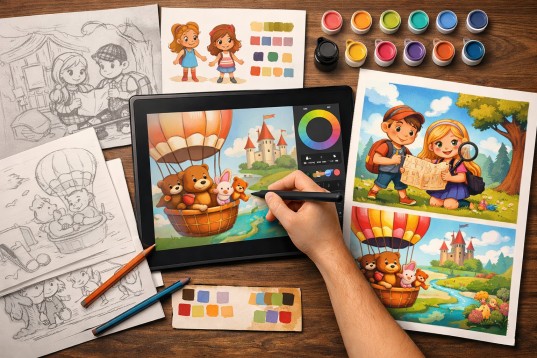
Many first-time authors assume that children's book illustration cost is calculated by simply multiplying the number of pages by a fixed price. In reality, professional illustration companies rarely use such a straightforward formula. Instead, they evaluate the amount of artwork required to tell the story effectively and estimate the project based on its creative scope. A children's book with 24 pages does not necessarily require 24 separate illustrations, because some pages may contain only text while others require large, detailed scenes.
Many illustrators actually calculate their quotes based on the number and complexity of illustrations rather than the total page count. Their estimate is influenced by factors such as illustration style, character consistency, background detail, storytelling requirements, revision stages, and publishing preparation. As a result, two books with the same number of pages can have completely different illustration budgets.
Before preparing a quotation, professional illustration companies usually evaluate:
Understanding these factors makes it much easier to see why illustration pricing varies from one project to another. In the next section, we'll look at how different types of illustrations influence the overall cost of a children's book.
Not every illustration requires the same amount of time or creative work. The final cost depends on the size of the artwork, the number of characters, the background detail, and how important the scene is to the story.
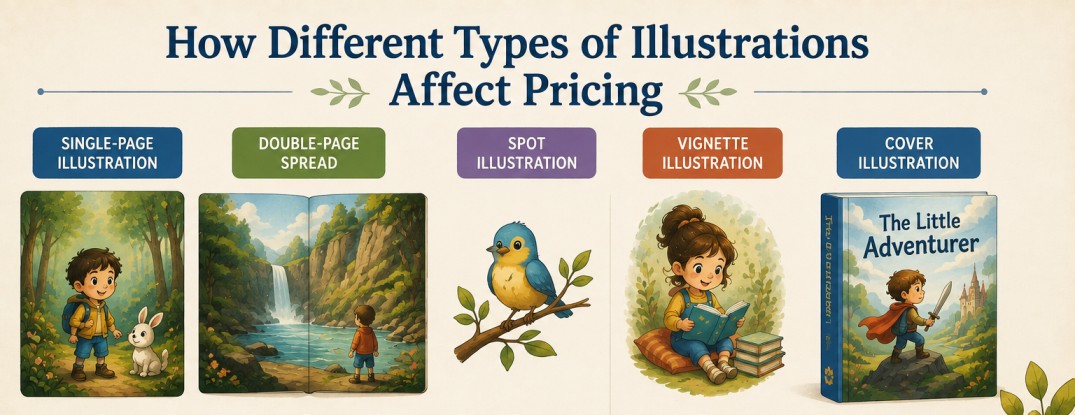
The most common illustration types used in children’s books include:
The important point is that authors are not paying only for the number of pages. They are paying for the artistic time, storytelling decisions, character consistency, and technical work required to create each illustration. A shorter picture book with detailed scenes and several double-page spreads may cost more than a longer book with simple artwork and limited backgrounds.
This is why professional illustration companies usually review the manuscript and prepare an illustration plan before giving a final estimate. The quote is based on the number and type of illustrations required, the visual style, the level of detail, and the complete scope of the project.
After understanding the difference between spot illustrations, single-page artwork, double-page spreads, and cover illustrations, authors should also examine what is included within the quoted price. Two illustrators may charge a similar amount per page while providing very different services and deliverables.
A typical per-page illustration rate may include:
The meaning of “per-page rate” can vary between providers. Some illustrators charge one amount for a simple page and a higher amount for scenes with several characters, detailed backgrounds, complex lighting, or unusual perspectives. Double-page spreads and cover illustrations may also be priced separately because they require more composition planning and production time.
Authors should confirm whether the quoted rate includes revisions, character development, text placement, source files, commercial rights, and print-ready preparation. These services are not automatically included in every illustration quote, and additional charges may significantly change the final project cost.
A lower per-page price is not always the least expensive option overall. If important services are charged separately later, the final amount may be higher than a quote that initially appears more expensive but includes a more complete illustration workflow.
Children's book illustration prices can vary widely because different providers use different workflows, experience levels, and pricing structures. The final rate is usually influenced by the illustration style, scene complexity, number of characters, background detail, revision policy, and the services included in the quotation.
As a general guide, per-page illustration pricing often falls into the following ranges:
These figures should be treated as general planning ranges rather than fixed industry prices. A simple spot illustration may cost much less than a full-page scene, while a detailed double-page spread with several characters and a complex background may cost significantly more.
| Illustration Type | Typical Relative Cost |
|---|---|
| Spot Illustration | Lowest |
| Vignette Illustration | Low to Moderate |
| Single-Page Illustration | Moderate |
| Double-Page Spread | Higher |
| Detailed Double-Page Spread or Cover Illustration | Highest |
For example, a 20-page children's book does not necessarily cost the page rate multiplied by 20. The total depends on how many full illustrations, spreads, spot illustrations, and other visual elements are actually required. A manuscript review and illustration plan are therefore essential before calculating the complete project budget.
The most useful way to compare prices is to look beyond the quoted rate and examine the complete scope of work. Authors should compare illustration quality, revision terms, commercial rights, file preparation, communication, and final deliverables before deciding which option offers the best value.
While many authors compare children's book illustration prices on a per-page basis, the total cost of illustrating a picture book depends on the complete scope of the project. A picture book is much more than a collection of individual illustrations—it is a coordinated visual production that transforms a manuscript into a finished, publication-ready book.
Two books with the same page count can have very different budgets because the amount of artwork, planning, revisions, and production work required is rarely identical.
Key takeaway: Per-page pricing is a useful way to estimate illustration costs, but it does not always reflect the complete investment required to produce a professionally illustrated children's book. The overall project budget is influenced by the artwork itself as well as the planning, revisions, and production support included.
The total illustration budget is usually influenced by the following factors:
| Project Element | How It Influences Cost |
|---|---|
| Number and type of illustrations | More illustrations, double-page spreads, and detailed scenes increase the overall project budget. |
| Illustration style | Simple cartoon artwork generally requires less production time than detailed painterly or realistic styles. |
| Character development | Creating consistent characters and maintaining them throughout the book adds planning and illustration time. |
| Background complexity | Detailed environments, lighting, and perspective require additional artwork and production effort. |
| Cover illustration | Front cover, spine, and back cover artwork are often estimated separately from the interior illustrations. |
| Revisions and production support | Sketch approvals, colour revisions, layout coordination, and print-ready file preparation all contribute to the total project cost. |
Looking at the complete illustration project rather than only the per-page rate gives authors a much more realistic understanding of the total investment required. It also makes it easier to compare illustration quotations fairly, since different companies may include different levels of planning, revisions, production support, and publishing-ready deliverables within their pricing.
| Project Type | Typical Budget Range* |
|---|---|
| Simple children's picture book | $500 – $800 |
| Standard professionally illustrated picture book | $600 – $1,500 |
| Highly detailed or premium illustration project | $2000+ |
*These are general planning ranges only. Actual costs vary depending on illustration style, project complexity, the number of illustrations, revision requirements, and the services included by the illustration company.
Understanding the total project budget helps authors plan realistically from the beginning. Rather than evaluating illustration costs page by page in isolation, it is usually more helpful to consider the complete workflow required to produce a professional children's book from manuscript to publication-ready artwork.
Illustration style is one of the biggest factors that determines how much you pay per page, because it directly affects the time, effort, and level of skill required to complete each artwork. Two books with the same number of pages can have completely different costs simply because of the style chosen.
In practical terms, pricing is influenced not just by style, but also by how much visual work goes into each scene—such as character detail, backgrounds, and composition.
Here’s how different illustration styles impact cost:
Another important factor many authors overlook is illustration size. A single-page illustration requires less composition and detail compared to a double-page spread, where the artwork extends across two pages and often includes more elements. Because of this, double spreads are typically priced higher than standard single-page illustrations.
The key is not to choose the most expensive style, but the most effective one for your story and audience. In many cases, a well-executed simple or moderately detailed style delivers better storytelling results than overly complex artwork that increases cost without adding real value.
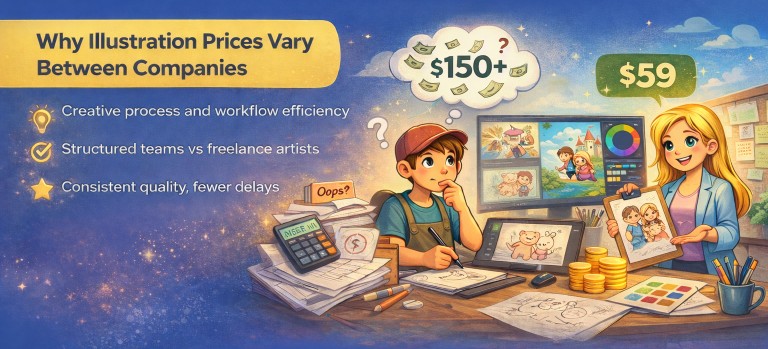
When comparing illustration quotations, it is important to understand that price reflects more than the artwork alone. Workflow efficiency, team structure, production methods, revision management, and the services included can all influence the final cost of a children's book illustration project. As a result, two companies may quote very different prices while offering similar illustration styles and overall quality.
Some illustration companies use specialised workflows and experienced teams to improve efficiency while maintaining consistent quality. As a result, authors may find significant differences in pricing even when comparing projects with similar illustration requirements.
Revisions are a normal and important part of every children's book illustration project. They allow authors and illustrators to refine the artwork, improve visual storytelling, and ensure that the illustrations match the manuscript before the final files are prepared. However, the way revisions are handled can also influence the overall cost and timeline of a project.
Many professional book illustration companies include a limited number of revision rounds within their standard pricing, although the exact number varies between providers and projects. Understanding the revision policy before work begins helps authors compare illustration quotes more accurately and avoid unexpected costs later.
A structured illustration workflow usually divides revisions into three stages:
| Revision Stage | Typical Changes | Impact on Cost |
|---|---|---|
| Sketch approval | Composition, character poses, scene layout, perspective, and major storytelling changes. | Usually the easiest and least expensive stage for making significant changes. |
| Colour approval | Colour palette, facial expressions, lighting, clothing details, and smaller visual adjustments. | Moderate effort because the artwork has already been developed. |
| Final artwork | Minor corrections, text placement adjustments, or small finishing refinements. | Major changes at this stage may require substantial rework and can increase project costs. |
One important point that many first-time authors overlook is that revisions normally apply to the approved illustration—not to changes in the manuscript itself. If the story, scene description, page layout, or creative direction changes after illustration work has started, the additional work may be treated as a new illustration rather than a standard revision.
Clear planning at the beginning of a project helps reduce unnecessary revisions. Preparing a page-by-page illustration plan, agreeing on character designs, and approving sketches before colouring begins allows both the author and illustrator to identify changes early, when they are quicker and less costly to make.
Before accepting an illustration quotation, authors should ask how many revision rounds are included, what types of changes are covered at each stage, and when additional revisions become chargeable. A clearly defined revision process usually leads to better communication, fewer delays, and a smoother illustration experience from the first sketch to the finished book.
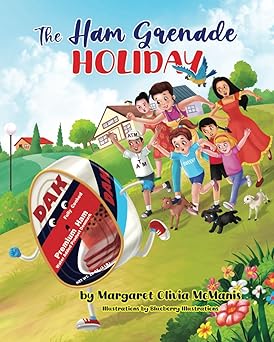
Keeping illustration costs under control does not mean choosing the cheapest option or compromising on quality. Most cost overruns occur because of poor planning, repeated revisions, changing project requirements, or unclear communication rather than the artwork itself. Careful preparation before illustration begins can help authors produce a professional-quality children's book while staying within budget.
The following strategies can help reduce costs without affecting the overall quality of the finished book:
| Cost-Saving Strategy | Why It Helps |
|---|---|
| Choose an appropriate illustration style | Simple, well-designed artwork often tells the story just as effectively as highly detailed illustrations while requiring less production time. |
| Finalise the manuscript before illustration begins | Changing scenes, text, or story direction after artwork has started often leads to expensive redraws and project delays. |
| Approve sketches carefully | Making major changes during the sketch stage is faster and less costly than modifying completed colour illustrations. |
| Provide clear feedback | Specific, organised comments reduce unnecessary revision rounds and improve communication between the author and illustrator. |
| Keep the page count realistic | Every additional illustration increases the overall project cost, so an efficient story structure can help control the budget. |
| Understand exactly what is included | Comparing revision policies, commercial rights, print-ready files, and publishing support helps prevent unexpected charges later. |
| Work with a coordinated workflow | Projects managed through a structured illustration process are generally completed more efficiently and with fewer production issues. |
Another effective way to control costs is to think about the illustration project as a complete workflow rather than a collection of individual pages. Careful planning, early approvals, and consistent communication usually reduce revisions, shorten production time, and help maintain a predictable budget throughout the project.
The goal should always be to achieve the best value rather than simply the lowest price. A well-managed illustration project often produces higher-quality artwork, fewer delays, and a smoother publishing experience than a project that requires repeated corrections or significant changes after production has begun.
The quoted illustration price does not always represent the complete amount an author will pay. Some estimates cover only the basic artwork, while other services are charged separately as the project progresses. Understanding these possible additional costs helps authors compare quotations more accurately and avoid unexpected expenses.
| Possible Additional Cost | Why It May Be Charged Separately |
|---|---|
| Extra revision rounds | Many illustration agreements include a limited number of revisions. Additional changes beyond the agreed limit may be billed separately. |
| Major changes after sketch approval | Changing the composition, character design, or scene direction after approval can require substantial redrawing and additional production time. |
| Character design | Some quotations cover page illustrations but charge separately for developing the appearance, clothing, expressions, and reference poses of recurring characters. |
| Cover illustration | The front cover, spine, and back cover may not be included in an interior illustration quote and can require a separate design fee. |
| Text placement and interior layout | Illustration and book layout are different services. Adding text, setting margins, arranging page spreads, and preparing the interior may involve an additional charge. |
| Print-ready file preparation | Artwork may need to be resized, extended for bleed, adjusted for trim specifications, or prepared for a publishing platform before it is ready for printing. |
| Source files | Editable working files may not be included with the final artwork. Some illustrators provide only flattened high-resolution files unless source files are purchased separately. |
| Commercial rights or licensing | Some agreements include full publishing rights, while others licence the artwork for limited uses, formats, territories, or print quantities. |
| Additional book formats | Preparing artwork for paperback, hardcover, ebook, or different trim sizes may require separate adjustments and file exports. |
| Rush delivery | Projects with unusually short deadlines may require priority scheduling and can involve an additional rush fee. |
Authors should ask for a clear list of deliverables before approving an illustration quote. The agreement should explain what is included, how many revisions are allowed, which files will be supplied, what publishing rights are granted, and which services may result in additional charges.
A lower initial quotation is not always the least expensive option. When cover artwork, revisions, layout, rights, and print-ready files are added later, the final cost may exceed a more complete quotation that includes these services from the beginning.
Children's book illustration cost depends on much more than the number of pages. Illustration style, scene complexity, character design, revision requirements, project planning, and the services included in the quotation all contribute to the final budget. Understanding these factors allows authors to compare illustration quotes more accurately and plan their publishing budget with confidence.
Rather than focusing only on the lowest per-page price, it is usually more beneficial to evaluate the complete value offered by an illustration company. A well-managed project with clear communication, organised revisions, consistent artwork, and publishing-ready deliverables often produces a better long-term result than a lower quotation that requires additional work later.
Every children's book is unique, so there is no single price that applies to every project. By understanding how illustration costs are calculated and what influences pricing, authors can make informed decisions, avoid unexpected expenses, and choose an illustration solution that matches both their creative vision and their budget.
How much does children's book illustration cost per page?
There is no fixed industry price. Illustration costs vary depending on the artwork style, level of detail, number of characters, background complexity, revision policy, and the services included in the quotation.
How much does a complete picture book illustration project cost?
The total cost depends on the number of illustrations, illustration style, character development, cover artwork, revisions, layout requirements, and publishing-ready file preparation. Looking at the complete project usually provides a more accurate budget than calculating only the per-page cost.
What is usually included in a children's book illustration quote?
Many professional illustration companies include sketches, final artwork, limited revisions, and high-resolution files. Some also include character design, cover illustration, layout support, or publishing-ready files, while others charge separately for these services.
Why do illustration prices vary so much?
Pricing differences are influenced by illustration style, project complexity, the number of illustrations, revision requirements, commercial rights, production workflow, and the experience of the illustrator or illustration company.
How can I reduce children's book illustration costs?
Careful planning, approving sketches before colour artwork begins, selecting an appropriate illustration style, providing organised feedback, and understanding what is included in the quotation can all help control costs without reducing quality.
Are revisions usually included in illustration pricing?
Most professional illustration companies include a limited number of revision rounds, although the exact policy varies. Authors should always confirm how revisions are handled before the project begins.
Are commercial publishing rights included with the illustrations?
This depends on the agreement. Some illustrators include full commercial publishing rights in their pricing, while others licence the artwork separately or charge additional fees for extended usage.
What hidden costs should authors look for?
Authors should check whether revisions, cover artwork, source files, commercial rights, print-ready files, layout support, additional formats, and rush delivery are included in the quoted price or billed separately.
Every children's book has different illustration requirements. The most accurate estimate depends on the manuscript, number and type of illustrations, artistic style, level of detail, revision needs, and final deliverables.
View our children's book illustration services and request a project estimate .
