Our Happy
Authors


A practical launch plan for authors who want momentum, clarity, and speed
A successful book launch doesn't happen by chance. It starts weeks before your release date with careful planning, clear timelines, and efficient coordination. While some authors spend months dealing with avoidable delays, others are able to launch their books much sooner by following a structured workflow that keeps every stage of the project moving forward.
This guide explores proven strategies for planning and accelerating your book launch, from organizing production schedules and reducing revision cycles to coordinating editors, illustrators, designers, and publishing teams more effectively. Whether you're preparing to launch a children's book, novel, memoir, business book, or illustrated title, these practical insights will help you shorten your journey to publication while maintaining the professional quality your readers expect.
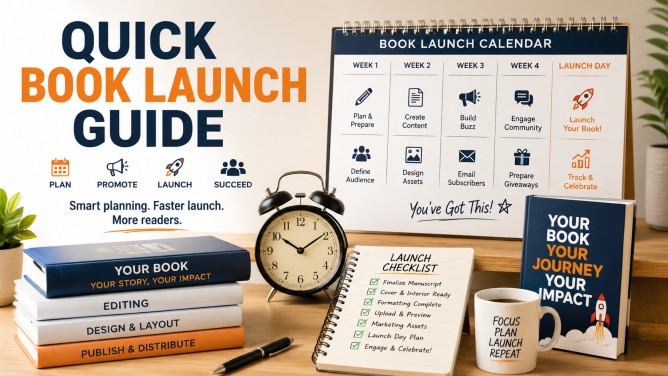
Core idea: Fast book launches are planned, not rushed. Authors who launch successfully usually make important decisions early, prepare their promotional materials well before release, and follow a structured timeline instead of trying to organize everything at the last minute.
A quick book launch is the result of preparation rather than speed. Many authors finish writing their book only to discover that they still need author photos, marketing graphics, launch announcements, review copies, website updates, email campaigns, and promotional content. Completing these tasks after the book is ready often delays the launch by weeks.
The fastest launches happen when every launch activity is planned alongside the final production stages instead of waiting until the release date is approaching. This allows creative work, marketing preparation, and launch planning to progress together while keeping the entire project on schedule.
Authors who consistently launch on time usually prepare the following before announcing their release:
Planning these activities before the release date reduces last-minute pressure, keeps every stage of the launch organized, and allows authors to introduce their book with greater confidence and consistency.
Quick launching and rushed publishing are very different. A rushed project skips important checks and hopes for the best. A quick launch uses preparation to remove delays. The goal is not to ignore quality. The goal is to stop wasting time on avoidable confusion.
| Quick Book Launch | Rushed Publishing |
|---|---|
| Release date is chosen after checking readiness. | Release date is chosen before the book or assets are ready. |
| Launch copy, graphics, and review outreach are prepared early. | The author starts writing posts and messages after the book is live. |
| The author knows what must happen before launch day. | The author keeps discovering missing tasks at the last minute. |
| Marketing is simple but coordinated. | Marketing is random, late, or inconsistent. |
| The first week has a follow-up plan. | The book is announced once and then forgotten. |
If your book files are almost ready, a 14-day launch window can be enough for a focused release. This is not a full publishing production schedule. It is a launch preparation schedule for authors who need structure and speed.
| Day | Launch Task | Purpose |
|---|---|---|
| Day 1 | Choose the launch goal and primary audience. | Decide whether the launch is aimed at parents, teachers, gift buyers, children, professionals, family networks, or a niche reader group. |
| Day 2 | Finalize the release message. | Create one clear sentence explaining who the book is for and why readers should care. |
| Day 3 | Prepare the short book description. | Write a concise description that can be reused on the website, social media, email, and launch posts. |
| Day 4 | Create launch graphics. | Prepare cover reveal images, square posts, story posts, quote cards, and a simple launch banner. |
| Day 5 | Build the review and support list. | List friends, early readers, teachers, bloggers, clients, parents, community members, and professional contacts who may support the launch. |
| Day 6 | Write personal outreach messages. | Prepare short messages asking people to read, review, share, or recommend the book. |
| Day 7 | Update the author presence. | Refresh the author website, author bio, profile photo, social handles, and book page. |
| Day 8 | Prepare email and social announcements. | Write launch-day posts in advance so you are not creating content under pressure. |
| Day 9 | Plan the cover reveal or teaser. | Warm up your audience before the sales announcement. |
| Day 10 | Check sales links and landing pages. | Make sure every link goes to the correct destination and every page has clear buying or inquiry instructions. |
| Day 11 | Schedule posts where possible. | Reduce launch-day workload by scheduling non-personal posts early. |
| Day 12 | Send early support reminders. | Tell close supporters the launch is coming and explain how they can help. |
| Day 13 | Prepare the launch-day checklist. | List the exact order of announcements, messages, follow-ups, and link checks. |
| Day 14 | Launch and track response. | Announce the book, reply to comments, thank supporters, and collect questions or feedback for follow-up posts. |
Many authors begin by asking where they should promote the book. A better question is: what should this launch achieve? The answer changes the entire plan, including the launch copy, graphics, outreach list, timeline, and success metrics.
A launch becomes faster when the author stops trying to reach everyone. A focused audience makes the launch copy clearer, the graphics simpler, and the outreach list easier to build. It also prevents wasted effort on platforms that do not match the actual launch goal.
Before creating social media posts, emails, or announcements, develop one clear launch message. This becomes the foundation for every place readers discover the book, including your website, author page, online bookstore listings, newsletters, and personal outreach.
A strong launch message should answer four simple questions:
Simple framework: Introduce the intended readers, explain the book's main value, briefly share why you created it, and finish with a clear call to action that tells readers how they can support the launch.
Keeping the same core message across every platform makes the launch feel consistent and professional. Readers who encounter your book more than once are more likely to remember it when the message stays focused instead of changing from one post to another.
Launch assets are the files, text, and graphics used to present your book during the launch. Preparing them before publication allows you to spend launch week promoting the book and engaging with readers instead of creating materials at the last minute.
Organizing assets by purpose makes them easier to manage and reuse.
Illustrated books often benefit from additional visual material such as character artwork, interior spreads, behind-the-scenes sketches, colouring pages, activity sheets, or a short read-aloud preview. These assets give readers, teachers, librarians, and reviewers more ways to discover and share the book.
Having these materials ready before launch day keeps the process organised, reduces last-minute delays, and allows you to respond quickly to opportunities as people begin discovering your book.
A book is ready to launch when readers can discover it, understand what it offers, and take the next step without confusion. If any of these steps are missing, promotion becomes less effective because interest is lost before the reader reaches the buying or inquiry page.
Before announcing the book, check readiness in three areas:
If too many of these items are still unfinished, the launch is not quick; it is incomplete. A short delay to organise these basics can create a stronger release than announcing too early and trying to fix missing pieces after readers have already seen the book.
Many authors treat launch day as the finish line. In reality, a successful launch begins before publication and continues after the book becomes available. Thinking in phases helps you build awareness, generate interest, and maintain momentum instead of relying on a single announcement.
| Launch Phase | Primary Goal | Typical Activities |
|---|---|---|
| Pre-launch | Create awareness and prepare readers | Reveal the cover, share teasers, update the website, prepare launch materials, contact reviewers, and let supporters know the release date. |
| Launch day | Announce the book clearly | Publish the main announcement, send the email newsletter, share purchase links, respond to comments, and thank early readers for their support. |
| Launch week | Maintain visibility and encourage engagement | Share reader feedback, answer common questions, post sample pages, tell the story behind the book, remind readers to leave reviews, and continue promoting the release. |
Each phase supports the next. Pre-launch creates anticipation, launch day gives readers a clear opportunity to discover the book, and launch week keeps the conversation going while new readers continue to find and recommend it.
Authors who spread their promotional efforts across several days often achieve better results than those who rely on a single announcement, because readers rarely make a purchasing decision the first time they hear about a new book.
Launching a children's book requires a different approach from launching most adult books. Although children are the audience, parents, grandparents, teachers, librarians, and gift buyers are usually the people who decide whether to purchase it. A successful launch therefore needs to appeal to both the child who will enjoy the story and the adult making the buying decision.
Visual presentation is especially important because readers often judge a children's book within seconds. The cover, illustrations, characters, and sample pages communicate the tone and quality of the book long before anyone reads the full description.
Before launch, make sure your promotional material clearly answers the questions potential buyers are most likely to ask.
Because children's books are highly visual, preparing these materials before launch helps readers understand the book quickly. A compelling cover, attractive illustrations, and a clear explanation of who the book is for often communicate more effectively than a long promotional post.
A book launch rarely succeeds because of a single announcement. Early readers and supporters help create the first wave of visibility by reading the book, sharing it with others, and leaving honest reviews after publication. Building these relationships before launch gives your book a stronger starting point than asking for support after it is already available.
Identify the people who are most likely to be interested in your book and organise your outreach before launch day.
Keep every outreach message short and personal. Explain what the book is about, why you thought of them specifically, where they can find it, and how they can support the launch. Making it easy for people to help usually produces better results than sending long promotional messages.
The goal is not to collect as many names as possible, but to build a group of genuinely interested readers who can help create momentum during the first days of the launch.
You do not need to promote your book everywhere. A faster launch usually comes from choosing a few platforms where your ideal readers already spend time. Concentrating your effort also helps you create more consistent content instead of managing multiple channels at once.
Launching on a few well-chosen platforms usually produces better results than trying to maintain a presence everywhere with limited time and resources.
A successful launch does not end after the first few days. Many readers discover books weeks or even months after publication through recommendations, search engines, libraries, events, and social media. Continuing to promote the book helps extend its visibility long after launch day.
Thinking beyond launch week turns a book release into an ongoing marketing effort rather than a single announcement.
The success of a launch should be measured against the goal you defined at the beginning of the process. High sales may be important for one author, while another may focus on school visits, professional credibility, or building an audience for future books.
Useful indicators include:
Reviewing these results helps identify which launch activities worked well and which areas can be improved before publishing the next book.
Authors often think professional support only matters during book production. In reality, it can also make launch preparation faster because the launch materials can be created from the same approved book assets.
A coordinated team can help prepare:
For authors working with Blueberry Illustrations, the advantage is that the design, illustration, publishing, and promotional materials can be connected visually. This helps the launch feel consistent instead of assembled from unrelated pieces at the last minute.
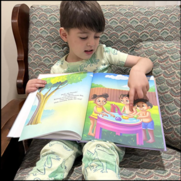
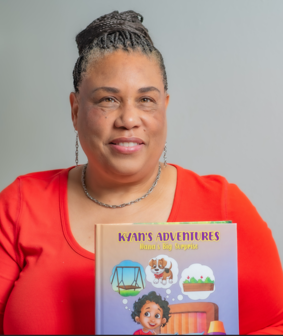

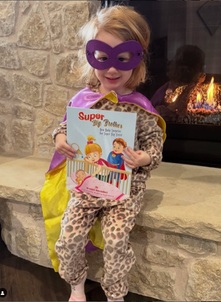


A quick launch does not mean every book becomes an immediate bestseller. The purpose of launching quickly is to introduce the book professionally, reach the intended audience, and create a strong foundation for future promotion. Some books gain attention immediately, while others grow gradually through reviews, recommendations, search engines, libraries, and word of mouth.
Success depends on factors such as the book's genre, target audience, existing author platform, marketing effort, and the time invested after publication. Viewing the launch as the beginning of a long-term marketing strategy often produces better results than expecting all sales during the first week.
When time is limited, not every launch task deserves equal attention. Completing a few high-impact activities usually produces better results than trying to do everything at once.
Many optional activities, such as elaborate graphics or multiple promotional videos, can always be added later. A clear message and an accessible book are usually more important than an extensive marketing campaign.
A book launch creates marketing material that can continue to be useful long after publication. Instead of creating everything for a single week, think about how each piece of content can support future promotion.
Each launch also strengthens your author platform. The audience, reviews, media coverage, and promotional material you build today can make future book launches faster and more effective.
A quick book launch is the result of careful preparation rather than rushing through the publishing process. Authors who define their launch goal, prepare their marketing materials, organise reader outreach, and plan their promotion in advance can release a book with greater confidence and fewer last-minute problems.
Remember that launch day is only the beginning of a book's journey. Continuing to engage with readers, collecting reviews, updating your author platform, and promoting the book over time can have a greater impact than a single day's marketing effort.
If you are publishing a children's book, picture book, workbook, or another highly illustrated title, professional visuals can make a significant difference to how readers first perceive the book. Blueberry Illustrations helps authors create custom illustrations, book covers, interior layouts, publishing-ready files, and promotional assets that support a professional and well-organised book launch.
For a complete guide to preparing, publishing, and distributing your book through Amazon, continue with our detailed guide: How to Self Publish a Book on Amazon.
To explore more self publishing tips and resources that can guide you in writing, designing, and launching your book, click on this link.
Click here to visit our Home Page.
View the portfolio of children’s book illustrations by Blueberry Illustrations:
https://blueberryillustrations.com/childrens-book-illustrations
Explore affordable publishing packages offered by Blueberry Illustrations:
https://blueberryillustrations.com/affordable-publishing-packages
Read author testimonials and reviews of Blueberry Illustrations:
https://blueberryillustrations.com/book-review
View the Amazon book store featuring books published by Blueberry Illustrations:
https://blueberryillustrations.com/book-store
Watch videos showcasing Blueberry Illustrations’ publishing and illustration work:
https://blueberryillustrations.com/videos
