Our Happy
Authors


A Comprehensive Guide for Authors
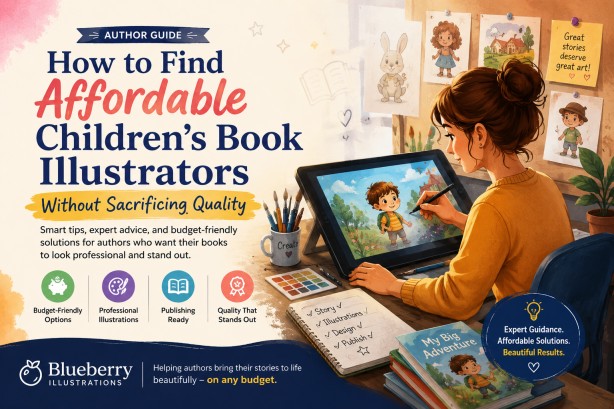
Finding affordable children’s book illustrators can feel confusing for first-time authors.
One artist may quote a few hundred dollars. Another illustrator company may quote several thousand. A freelance artist may charge per page, while book illustration companies may offer complete packages that include illustration, cover design, formatting, and publishing support.
At first, it can look like everyone is offering the same thing at very different prices.
But in children’s book publishing, the cheapest option is not always the most affordable option.
The real goal is to find illustration support that fits your budget while still protecting the quality, consistency, and professional presentation of your book.
Unfortunately, many authors only discover the difference after they have already invested time and money into the wrong approach.
Understanding what actually affects illustration costs, what hidden expenses often appear later, and how experienced publishing teams think about children's books can help you make better decisions before spending your budget.
Before choosing an illustrator, illustration agency, or publishing service, it helps to understand what truly creates value in a children's book project and where authors often make expensive mistakes.
Many first-time authors begin planning their budget with a very simple formula.
For example, they may think:
20 pages × illustration price per page = total book cost
At first glance, this feels logical.
If one illustration costs a certain amount and the book contains twenty pages, the total project cost should simply be the number of pages multiplied by the illustration price.
But children's books rarely work that simply.
In reality, professional children’s books involve much more than creating individual pictures.
Most successful books require several additional stages before they become ready for readers, bookstores, libraries, Amazon KDP, or printing platforms.
Many authors do not realize that the artwork itself often becomes only one part of the complete publishing process.
A complete picture book project may also require:
For example, you may hire the best illustrator who may create beautiful artwork, but if the text placement was never planned, words may cover important parts of the illustrations.
A cover may look attractive on screen but later fail because the spine width was calculated incorrectly.
Interior pages may appear perfect until they are uploaded and margins, bleed areas, or trim sizes create printing problems.
These details often remain invisible during the early planning stage, which is why many authors underestimate their budget.
Many first-time authors expect to pay only for illustrations.
Then they discover additional needs later:
This does not necessarily mean publishing becomes extremely expensive.
It simply means that authors are often budgeting for artwork alone when the project actually requires complete publishing preparation.
Understanding these requirements early helps authors build more realistic expectations, avoid unexpected costs later, and make stronger decisions before investing their budget.
One of the biggest mistakes first-time authors make is assuming that affordable and cheap mean the same thing. They do not. Affordable usually means receiving strong value for the investment you make, while cheap often means choosing the lowest number available without understanding everything included behind that number.
Children’s books are rarely simple illustration projects. They involve storytelling, publishing knowledge, design decisions, formatting requirements, technical preparation, and long-term consistency across an entire book. When experienced story book illustrators or established book illustration companies quote a higher price, authors are often paying for much more than artwork alone.
They may also be paying for:
Experience often prevents expensive problems before they happen. An experienced illustrator may immediately recognize that text placement will cover an important facial expression, notice that a scene may disappear into the center gutter during printing, or understand that hardcover formatting requirements differ from paperback formatting. These details may seem small individually, but across an entire children’s book they can create significant delays and additional expenses if overlooked.
Trust also becomes extremely important during book creation. Authors are not simply purchasing illustrations; they are trusting someone with characters, stories, and ideas that may have been imagined for years. A trusted illustrator company or experienced publishing team often brings something difficult to measure with a price tag alone — reliability.
Reliability means meeting deadlines, communicating clearly, handling revisions professionally, and identifying problems before they delay the project. A very low-cost illustrator may create attractive images but may not understand trim size, bleed, gutter space, text placement, paperback formatting, or Amazon publishing requirements. Authors sometimes later discover they need another designer to resize files, redesign layouts, or prepare the book properly for publishing.
In those situations, the cheapest option quietly becomes the more expensive option. Affordable does not necessarily mean spending more money. It means investing in quality, experience, and support that help the book succeed long after the illustrations are finished.
Many authors open an illustrator's website and immediately ask one question:
"Do I like these pictures?"
That question matters, but experienced authors and publishing professionals usually look much deeper than visual appeal alone.
A portfolio can contain beautiful artwork and still fail to prove that the illustrator can successfully complete an entire children's book project.
Creating one strong image and creating a complete picture book are very different skills.
A children's book requires consistency, storytelling ability, emotional range, and an understanding of how illustrations work across multiple pages.
Instead of simply asking whether the artwork looks attractive, authors should ask:
One hidden mistake many authors make is focusing only on highly polished portfolio images. Portfolio pieces are often created as standalone showcase artwork and may not represent the challenges involved in illustrating twenty or thirty connected pages.
For example, a character may look excellent in one image, but can the illustrator maintain that same hairstyle, clothing design, proportions, expressions, and personality throughout an entire book?
Children notice inconsistency surprisingly quickly.
Strong children's book portfolios often demonstrate storytelling rather than simply beautiful artwork. They show characters moving through situations, expressing emotions, and interacting naturally across different scenes.
A beautiful image may sell attention. Storytelling ability is what helps complete a successful children's book.
Many first-time authors think about Amazon publishing only after the illustrations are completed.
In reality, publishing requirements should often be considered before the first illustration is even created.
Artwork decisions made early can affect the entire production process later.
Professional publishing teams frequently plan around technical requirements before illustration begins because changing these details after completion can become expensive and time consuming.
Important factors often include:
For example, a scene may look perfect on a computer screen but later lose important details because text overlaps artwork or because important elements fall into the center gutter of the printed book.
Similarly, cover designs cannot always be finalized early because spine width changes depending on page count, paper type, and final interior formatting.
Even image resolution can create problems. Artwork that looks sharp on screen may appear blurry or pixelated when prepared incorrectly for print.
Many authors discover these requirements only after attempting to upload files.
This is one reason experienced book publishing services and Amazon self publishing companies often plan technical details alongside illustration development instead of treating publishing as a final step.
Beautiful illustrations help attract readers, but properly prepared files help ensure those illustrations become successful published books.
Portfolio quality is often one of the first things authors review when searching for children's book illustrators. However, portfolio images alone may not provide a complete understanding of an illustrator's experience, workflow, or ability to manage an entire book project.
Individual portfolio pieces are frequently created as showcase work. Children's books, however, involve multiple stages including illustration consistency, interior preparation, revisions, formatting, and publishing requirements. Because of this, many authors also review testimonials, client feedback, and previously published books before making a decision.
Testimonials and reviews can provide information that artwork itself cannot easily demonstrate. They may reveal patterns related to communication, project management, revision handling, turnaround time, and overall client experience.
Another useful indicator is the number of books that have already been completed and published. Published books can provide a broader view of how an illustrator or publishing team performs across complete projects rather than isolated images.
A larger number of completed books can sometimes indicate an additional level of trust and experience within the publishing process. While the total number of published books alone does not guarantee quality, a substantial publishing history often suggests that an illustrator, illustration company, or publishing team has worked through a wide range of situations that commonly arise during book production.
Over time, repeated experience across multiple projects can create familiarity with challenges such as maintaining character consistency across dozens of illustrations, preparing files for different print formats, adjusting layouts for various trim sizes, handling revisions efficiently, and meeting technical requirements for platforms such as Amazon KDP.
Publishing experience may also provide insight into how a team manages practical aspects of production that are not immediately visible within a portfolio, including project organization, communication workflows, formatting requirements, and preparation for paperback, hardcover, and digital editions.
For authors reviewing potential illustration partners, previously published books can therefore serve as more than examples of artwork. They may provide evidence of repeated project completion and demonstrate whether a team has experience taking books through the entire process from concept development to final publication.
For many first-time authors, the decision extends beyond choosing artwork they like. It often involves evaluating reliability, experience, and evidence of completed work within real publishing environments.
Before hiring, authors should ask clear questions.
These questions can prevent misunderstanding later.
Many first-time authors assume that publishing begins after the manuscript is finished. In practice, much of the publishing process begins much earlier. Decisions made during planning often affect illustration costs, formatting requirements, printing options, and the overall reading experience.
Children's books are usually built from several connected decisions rather than a single manuscript. A change in one area frequently affects several others. For example, changing the page size may alter illustration composition, text placement, cover dimensions, and printing costs. Similarly, changing the target age group may influence illustration style, sentence length, color usage, and visual complexity.
Before beginning illustration or contacting a publishing service, authors often benefit from establishing a basic structure for the project.
Target age group can influence nearly every creative decision. Books for younger readers generally use simpler visual storytelling, larger illustrations, and fewer words per page, while books for older children may contain greater detail and more complex scenes.
Book size also affects design and production. A square picture book, an 8 x 10 inch format, and a chapter book layout each create different requirements for page composition, text positioning, and printing preparation.
Page count is another important consideration because many printing platforms work with specific page structures. Changes in page count later in the process may affect interior layout, spine calculations, and final production files.
Publishing format can also influence preparation requirements. Paperback, hardcover, and ebook editions frequently require different file specifications, dimensions, and formatting adjustments. Hardcover editions may use different spine calculations and cover layouts, while digital editions often require additional formatting for screen readability.
Authors sometimes focus primarily on completing illustrations and consider technical details later. However, many publishing challenges arise when planning decisions are delayed until the final stages of production.
Establishing a clear structure early often helps reduce revisions, avoid unexpected costs, and create a smoother path from manuscript development to final publication.
Successful self-publishing authors often approach book creation differently from many first-time authors. Instead of focusing only on completing illustrations or uploading files, they frequently think about the book as a complete product that readers will discover, purchase, and experience.
Many first-time authors naturally concentrate most of their attention on the manuscript and artwork. While these elements are important, experienced self-publishing authors often recognize that the reading experience begins long before a child opens the first page.
For example, readers and parents may first notice:
Successful authors often plan these factors early rather than treating them as final tasks completed after illustration work ends.
Many also work with professionals who understand children's publishing requirements because children's books usually involve multiple connected elements including illustration development, page layout, formatting, print preparation, and publishing specifications.
They frequently think beyond individual illustrations and consider larger questions such as:
Successful self-publishing authors do not necessarily spend more money or use larger teams. In many cases, they simply make important decisions earlier in the process and treat publishing as a structured project rather than a final upload step.
Many first-time authors initially assume that publishing involves only two stages: completing the manuscript and creating illustrations. In practice, children's books often involve multiple connected steps that influence one another throughout production.
For example, illustration decisions can affect text placement, page count can affect spine calculations, and trim size can influence both cover design and interior layout. Small changes made late in the process sometimes create additional revisions across several parts of the book.
Because of this, some authors choose to manage each stage separately while others prefer complete publishing support.
Working independently can provide greater flexibility and may work well for authors who already understand publishing workflows or who have experience coordinating multiple service providers. However, it often requires managing separate illustrators, editors, designers, and formatting specialists while ensuring that all files remain compatible with final publishing requirements.
Full book publishing services are often selected when authors need support with multiple connected stages including:
For many authors, the decision is not necessarily about convenience alone. It is often about reducing revisions, avoiding technical issues, and ensuring that different stages of the project work together correctly.
Publishing teams that regularly work on children's books may already be familiar with challenges that first-time authors encounter for the first time, including text placement issues, bleed requirements, file specifications, page structure limitations, and formatting adjustments.
Budget limitations have traditionally created difficulties for some authors entering children's publishing. Custom illustration projects may require substantial time and investment, particularly when books include many pages, multiple characters, or highly detailed scenes.
As AI image generation tools have become more widely available, many authors have begun exploring lower-cost alternatives. These tools can create images quickly and reduce production costs, making them attractive to parents, teachers, first-time writers, and independent authors working with limited budgets.
However, generating individual images and creating a complete children's book are often very different processes.
Children's books usually require:
AI tools may generate illustrations rapidly, but they do not automatically organize these elements into a finished publishing product.
As a result, many authors use AI as a supporting production tool rather than as a complete replacement for publishing expertise.
AI can reduce production costs and accelerate parts of the creative process, but image generation alone does not necessarily solve many of the practical challenges involved in publishing children's books.
Without professional oversight, common issues frequently appear:
Some of these issues may appear minor when viewed individually. Across an entire book, however, they can significantly affect readability, visual consistency, and the overall professional appearance of the final product.
For many projects, the role of publishing professionals shifts from creating every image manually toward directing, refining, correcting, and preparing content for final publication.
As a result, the value frequently comes not only from the technology itself, but from how the technology is managed.

For authors working with smaller budgets, Blueberry Illustrations also offers AI-assisted publishing packages beginning at $249. Rather than relying solely on automated image generation, these packages combine technology with professional publishing support.
The process focuses on helping authors move from isolated illustrations toward a complete book experience by supporting elements such as character consistency, page layout, formatting preparation, and publishing requirements.
The objective is not simply reducing cost. The larger goal is helping authors create books that remain visually polished, professionally structured, and prepared for publication while staying within realistic budget limitations.
Finding affordable children’s book illustrators does not mean lowering your standards.
It means understanding what your book truly needs and choosing the right support for your budget.
Whether you work with freelancers, an illustration agency, book illustration companies, or AI-assisted publishing packages, the final book should still feel thoughtful, consistent, and professionally prepared.
Children deserve books that feel magical.
Authors deserve publishing options that feel possible.
With the right planning and the right creative team, even a budget-friendly book can stand out beautifully.


To explore more self publishing tips and resources that can guide you in writing, designing, and publishing your book, click on this link.
Click here to visit our Home Page.
Click here to view the portfolio of children’s book illustrations by Blueberry Illustrations: https://blueberryillustrations.com/childrens-book-illustrationsClick here to explore affordable publishing packages offered by Blueberry Illustrations: https://blueberryillustrations.com/affordable-publishing-packagesClick here to read author testimonials and reviews of Blueberry Illustrations: https://blueberryillustrations.com/book-reviewClick here to view the Amazon book store featuring books published by Blueberry Illustrations: https://blueberryillustrations.com/book-storeClick here to watch videos showcasing Blueberry Illustrations’ publishing and illustration work: https://blueberryillustrations.com/videos