Our Happy
Authors


A Comprehensive Guide for Authors
Early literacy refers to the foundational skills children develop before formal reading and writing. These include recognizing letters, understanding sounds, identifying patterns, and connecting words with meaning. These early skills shape how easily a child learns to read later.
Strong early literacy leads to:
| Skill | What It Means | Why It Matters |
|---|---|---|
| Letter Recognition | Identifying letters and shapes | Builds reading foundation |
| Phonemic Awareness | Understanding sounds in words | Helps with pronunciation |
| Vocabulary | Knowing word meanings | Improves comprehension |
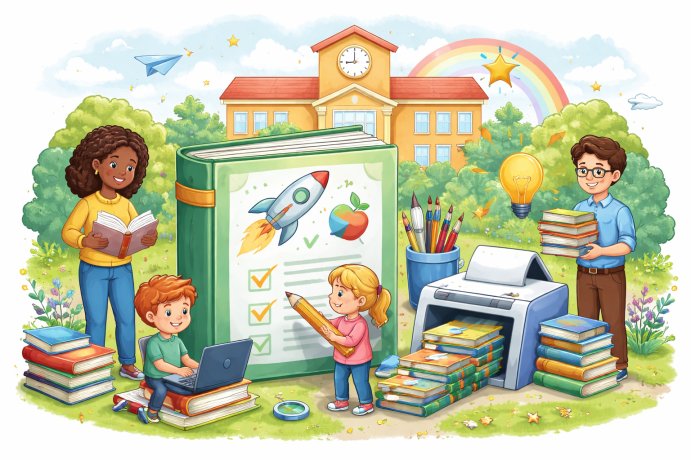
Childrens Book Illustration Services play a crucial role in helping young readers understand and enjoy books. At an early stage, children are still developing language skills, so relying only on text can make reading difficult. Illustrations act as visual support that explains the story, making it easier for children to follow along and stay engaged.
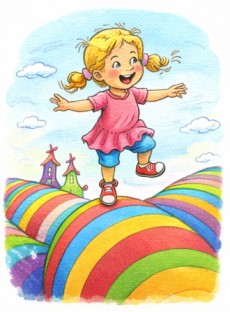
When a child sees a picture alongside a word or sentence, they begin to connect meaning naturally. For example, if a page shows a picture of a dog running, the child can associate the word “dog” and the action “running” without needing complex explanations. This process strengthens both comprehension and vocabulary development.
Illustrations support literacy by:
Helping children connect words with images. Visuals make it easier to understand new words by showing their meaning directly.
Making reading less overwhelming. Images break up large blocks of text, making books feel more approachable for beginner readers.
Improving memory and retention. Children are more likely to remember stories when they can visualize them through illustrations.
Encouraging independent reading. Even if a child cannot read every word, illustrations help them understand the story and stay confident.
By combining text with meaningful visuals, childrens book illustration services create a more interactive and effective reading experience. This not only improves early literacy skills but also builds a lasting interest in reading.
| Feature | Impact on Learning |
|---|---|
| Visual Support | Improves understanding of story |
| Color and Design | Keeps children engaged |
| Character Expression | Helps interpret emotions |
Visual learning is not just helpful for children—it is the primary way young readers understand information. Before children become fluent readers, their brains rely heavily on visual cues to interpret meaning. This means that in a children’s book, illustrations are not supporting the story—they are often leading it.
From an author’s perspective, this changes how a book should be created. Instead of writing a complete story and then “adding illustrations,” the story and visuals must be developed together. Every illustration should answer a question for the child: What is happening? Who is speaking? What emotion is being shown?
Children process images almost instantly, while text requires decoding. When a child sees a visual scene, their brain quickly identifies characters, actions, and emotions. This reduces the effort required to understand the written words and allows the child to focus on language development instead of basic comprehension.
For example, if your text says “The boy was nervous,” a young reader may not fully understand the word “nervous.” But if the illustration shows the boy with a worried face, holding his hands tightly, and standing alone, the child immediately understands the emotion. The word then becomes easier to learn and remember.
This is where many authors make a mistake—they write text that carries all the meaning, leaving illustrations with no real role. In effective children’s books, illustrations carry 50% or more of the storytelling responsibility.
Visual learning supports child development in the following ways:
It reduces cognitive load by allowing children to understand context without decoding every word
It builds word association by linking new vocabulary with clear visual meaning
It improves sequencing skills, helping children follow a story from one scene to the next
It strengthens emotional understanding by showing expressions, actions, and reactions visually
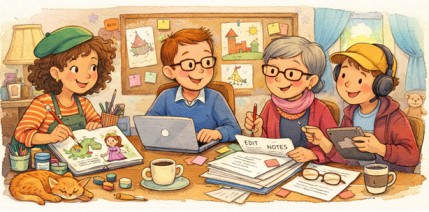
For authors planning a picture book, this means you should think in scenes, not just sentences. Each page should visually communicate a complete idea, even if the text is minimal. A well-illustrated page should still make sense to a child even if they cannot read the words yet.
| Author Approach | Outcome for Child |
|---|---|
| Text-heavy storytelling with minimal visual direction | Slower comprehension and lower engagement |
| Balanced storytelling where illustrations explain key moments | Faster understanding and better retention |
| Visual-first storytelling with strong scene design | High engagement, improved literacy, and independent reading confidence |
In practical terms, childrens book illustration services are not just about creating attractive images. They help translate your story into a format that a child’s brain can process efficiently. The right visuals guide attention, clarify meaning, and create a smoother reading experience.
For any author aiming to publish a successful children’s book—especially on platforms like Amazon—understanding visual learning is essential. It directly impacts how well your book is understood, how engaging it feels, and whether a child wants to read it again.
For young readers, words alone are often abstract and difficult to understand. Children do not naturally know what a word means unless they can connect it to something familiar. Illustrations solve this problem by giving immediate visual context, turning unknown words into something recognizable and clear.
When a child sees a word along with a corresponding image, their brain creates a direct connection between the two. This process is much faster than explaining the word through text alone. Over time, repeated exposure helps the child remember and recognize the word independently.
For example, if a page includes the word “apple” along with an image of a bright red apple, the child does not need a definition. The meaning is understood instantly. The same applies to actions and emotions—an illustration showing a child laughing helps explain the word “happy” without additional explanation.
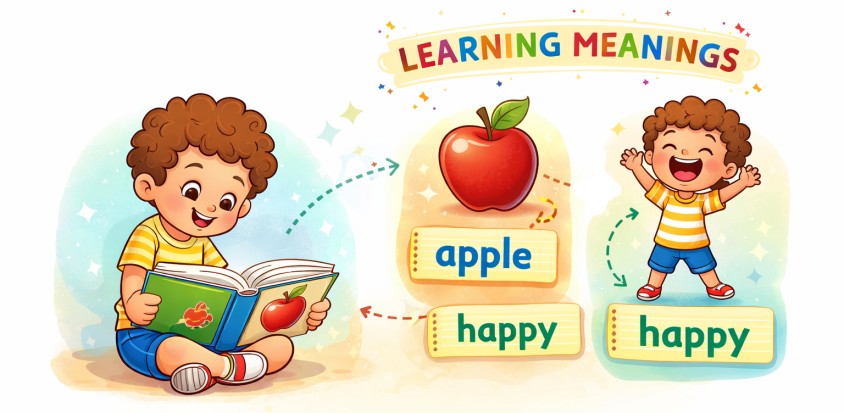
This is especially important when introducing new or complex vocabulary. Without visual support, children may guess incorrectly, skip words, or lose interest in reading altogether.
Creates a direct association between words and real-world objects, making meaning clear without extra explanation
Reduces confusion when encountering new vocabulary, as children can rely on visuals for understanding
Speeds up learning because children process images faster than written definitions
For authors, this means every important word or concept should be supported visually, especially in early reading books. Instead of explaining everything through sentences, illustrations can carry a large part of the meaning, making the book easier to read and more effective for learning.
Picture books play a critical role in vocabulary development because they introduce new words in a way that feels natural rather than forced. Instead of memorizing definitions, children learn words through context, repetition, and visual association. This makes the learning process faster, more intuitive, and more enjoyable.
When a child reads a picture book, they do not rely only on text. They observe the illustration, understand the situation, and then connect the words to that visual scene. This allows them to “guess” meanings correctly, even if they are seeing the word for the first time.
For example, if a page shows a child holding an umbrella in heavy rain, words like “rain,” “wet,” or “umbrella” become easy to understand without explanation. Over multiple pages and repeated exposure, these words become part of the child’s vocabulary.
Picture books also allow authors to introduce slightly advanced vocabulary without overwhelming the reader. Because illustrations provide support, children can understand words that would otherwise be too difficult if presented in text-only format.
Encourages word recognition by repeatedly exposing children to the same words alongside consistent visuals
Supports contextual learning, where children understand words based on the situation shown in the illustration
Reduces dependency on memorization, since meaning is understood through experience rather than definition
Introduces new and slightly advanced vocabulary without increasing reading difficulty
Reinforces learning through repetition, as characters, objects, and actions appear multiple times across the story
Helps children understand action words and emotions through visual cues, not just static objects
Builds confidence, as children can understand and use new words without needing external help
For authors, this means vocabulary should be planned visually as well as textually. Instead of simplifying every word, it is more effective to support new words with clear illustrations. This approach not only improves comprehension but also expands a child’s vocabulary in a meaningful and lasting way.
Visual cues are one of the most powerful tools in helping children understand a story. At an early reading stage, children are not able to decode every word quickly or accurately. Instead of stopping, they rely on visual signals such as facial expressions, character actions, and background details to understand what is happening.
This means comprehension does not depend entirely on reading ability. A child can follow the story by interpreting the visuals first and then using the text to confirm or expand their understanding. This reduces frustration and keeps the reading experience smooth.
For example, if a character is shown smiling and jumping, the child understands excitement or happiness even if they cannot read the sentence fully. Similarly, a dark background with a scared expression immediately signals fear or danger, helping the child grasp the mood of the scene.
Visual cues also guide the flow of the story. They help children understand sequence, actions, and cause-and-effect relationships without needing complex explanations. This is especially important in picture books where each page builds on the previous one.
Improves story understanding by showing emotions, actions, and situations clearly through visuals
Keeps children engaged, as they actively observe and interpret images instead of passively reading text
Supports independent reading, allowing children to follow the story even if they skip or struggle with words
Helps children understand sequence and flow, as illustrations show what happens before and after
Reduces reliance on adult guidance, since visuals provide immediate clarity
Strengthens comprehension by combining visual interpretation with reading
For authors, this means every illustration should have a clear purpose. Each visual element—whether it is a character’s expression, posture, or environment—should support the story and help the child understand what is happening without confusion.
When visual cues are used effectively, they turn reading into an intuitive experience. Children are not just reading words—they are understanding the story as a whole.
Illustrations do more than support the story—they invite children to think, explore, and imagine beyond what is written on the page. At an early age, curiosity is a key driver of learning. When visuals are engaging and slightly open-ended, children begin to ask questions, predict outcomes, and create their own interpretations of the story.
Unlike text, which gives direct information, illustrations can suggest multiple possibilities. A detailed background, an unusual character, or a small hidden element in a scene can make a child pause and wonder what is happening. This process naturally builds curiosity and keeps the child mentally involved in the story.
For example, if an illustration shows a mysterious door slightly open in the background, a child may start imagining what is behind it—even if the text does not explain it immediately. This kind of visual storytelling encourages deeper engagement and makes the reading experience more interactive.
Illustrations also play a major role in developing imagination. When children see creative worlds, unique characters, and expressive scenes, they begin to visualize their own ideas. This not only improves their ability to think creatively but also helps them become better storytellers over time.
Stimulates creativity by presenting imaginative scenes that go beyond everyday experiences
Encourages storytelling, as children begin to describe what they see and even create their own versions of the story
Builds interest in reading, since visually rich books feel more engaging and enjoyable
Encourages questions and curiosity, prompting children to think about what might happen next
Develops visual imagination, helping children form mental images and creative ideas
Keeps children engaged for longer periods, as they explore details within illustrations
For authors, this means illustrations should not only explain the story but also add depth to it. Including small details, expressive characters, and visually interesting environments can turn a simple story into an immersive experience.
When done effectively, illustrations transform reading from a passive activity into an active process where children observe, imagine, and participate in the story.
Creating illustrations for children is not just about drawing attractive images—it is about matching the visual style to the child’s age, understanding level, and reading ability. What works for a toddler will not work for an older child, and using the wrong style can make a book confusing or unengaging.
Story book illustrators carefully adjust elements such as detail, color, composition, and character design based on the target age group. Younger children need clarity and simplicity, while older readers can handle more complex scenes and visual storytelling.
For example, very young readers (ages 2–5) respond best to bold shapes, bright colors, and minimal background detail. This helps them focus on the main subject without distraction. In contrast, children aged 6–9 can understand layered scenes, expressions, and subtle visual cues that add depth to the story.
Illustrators also consider emotional understanding. Younger children rely heavily on exaggerated facial expressions to recognize feelings, while older children can interpret more subtle emotions and context within a scene.
Simple designs for younger children, using clear shapes and minimal elements to avoid confusion
More detailed visuals for older readers, allowing for richer storytelling and deeper engagement
Careful color usage, where bright and contrasting colors attract younger readers while balanced palettes suit older audiences
Age-appropriate themes, ensuring the content matches the child’s emotional and cognitive level
Readable composition, where important elements are placed clearly so children know where to focus
Consistent character design, helping children recognize and connect with characters throughout the story
| Age Group | Illustration Approach |
|---|---|
| 2–5 Years | Simple shapes, bright colors, minimal background, clear focus |
| 6–9 Years | More detail, expressive characters, storytelling through scenes |
| 9+ Years | Complex visuals, subtle emotions, richer environments |
For authors, this means illustration decisions should be aligned with the target reader from the beginning. Choosing the wrong style can reduce comprehension and engagement, even if the story itself is strong.
Professional childrens book illustration services focus on these age-specific details to ensure that the final book is not only visually appealing but also easy to understand and enjoyable for the intended audience.
In early literacy, children do not learn effectively from text or illustrations alone—it is the combination of both that creates real understanding. The way text and visuals are placed together on a page directly affects how easily a child can read, interpret, and remember the content.
For young readers, illustrations should not repeat the text word-for-word, nor should text try to explain everything without visual support. Instead, both should work together, where the illustration provides context and the text introduces language.
For example, if the text says “The cat climbed the tree,” the illustration should clearly show the action. This allows the child to connect the word “climbed” with the visual action, strengthening comprehension and vocabulary at the same time.
A common mistake authors make is adding too much text on a page, assuming more explanation improves learning. In reality, this overwhelms early readers. Short, simple sentences supported by clear visuals are far more effective.
Use short and simple sentences so children can focus on understanding rather than decoding long text
Ensure every key sentence is supported by a clear illustration that explains the meaning visually
Maintain a logical flow between pages, where illustrations help show what happens next in the story
Avoid overcrowding pages with too many elements, as this can distract and confuse young readers
Place text in a way that naturally guides the child’s eye from words to image
Use repetition in both text and visuals to reinforce learning and improve memory
| Approach | Result for Early Readers |
|---|---|
| Too much text, limited visuals | Confusion, low engagement, slower learning |
| Clear visuals with minimal text | Better understanding, faster comprehension |
| Text and illustrations working together | Strong literacy development and higher retention |
For authors, the key question should be: “Can a child understand this page by looking at the illustration and reading just one sentence?” If the answer is yes, the page is working effectively for early literacy.
When text and illustrations are combined correctly, they reduce reading difficulty, improve comprehension, and help children gain confidence as independent readers. This is one of the most important principles in creating successful picture books.
Beginner readers are at a stage where reading is still a challenging task. They are learning to recognize words, understand sentence structure, and connect meaning—all at the same time. Without support, this can quickly become overwhelming. Illustrated books reduce this difficulty by providing visual guidance that helps children understand the story without relying entirely on text.
At this stage, children are not fluent readers. They often pause, guess words, or skip difficult sentences. Illustrations act as a support system, allowing them to continue reading without losing the meaning of the story. This creates a smoother and more positive reading experience.
One of the biggest advantages of illustrated books is that they reduce cognitive load. Instead of decoding every word to understand the story, children can use images to fill in gaps. This allows them to focus on learning language rather than struggling with comprehension.
For example, if a child cannot read a word like “jumped,” but sees a character in mid-air, they can still understand the action. Over time, repeated exposure helps them recognize the word independently. This combination of visual and textual learning accelerates reading development.
Reduces reading anxiety by allowing children to understand the story even when they cannot read every word correctly
Builds confidence, as children feel successful when they can follow and interpret the story on their own
Encourages consistent reading habits by making books enjoyable rather than frustrating
Supports independent reading, reducing the need for constant adult assistance
Improves comprehension by combining visual cues with text, helping children understand context and meaning
Strengthens word recognition through repeated exposure to words supported by visuals
Increases attention span, as engaging illustrations keep children focused for longer periods
| Without Illustrations | With Illustrations |
|---|---|
| Higher difficulty in understanding text | Easier comprehension through visual support |
| Frequent reading interruptions | Smoother reading flow |
| Lower confidence | Increased confidence and independence |
For authors, this means illustrated books are not optional for beginner readers—they are essential. The goal is not just to tell a story, but to make that story accessible. Every illustration should help reduce effort, clarify meaning, and guide the reader through the book.
When designed correctly, illustrated books turn reading from a difficult task into an enjoyable activity. This positive early experience is what ultimately builds strong, lifelong readers.
High-quality illustrations do much more than make a book look attractive—they directly influence how long a child stays engaged, how well they understand the story, and whether they want to return to the book again. For beginner readers, engagement is critical because their attention span is still developing.
Children are naturally drawn to visuals first. When illustrations are clear, expressive, and thoughtfully designed, they immediately capture attention and invite the child to explore the page. On the other hand, poorly designed or inconsistent illustrations can confuse the reader and reduce interest, even if the story itself is strong.
High-quality illustrations also improve engagement by guiding the child’s focus. Good composition ensures that the child knows exactly where to look, what is important, and how the story is progressing. This creates a smooth reading experience where the child is not distracted or overwhelmed.
Another important factor is emotional connection. Well-crafted characters with clear expressions and body language help children relate to the story. When a child connects emotionally, they are more likely to stay engaged and follow the story until the end.
Attracts attention immediately, encouraging children to open and explore the book
Improves reading time, as engaging visuals keep children focused for longer periods
Enhances overall experience by making the story feel lively, interactive, and enjoyable
Guides visual focus, helping children understand what is important on each page
Builds emotional connection through expressive characters and relatable scenes
Encourages re-reading, as children return to explore details they may have missed
| Illustration Quality | Impact on Engagement |
|---|---|
| Low or inconsistent quality | Confusion, distraction, reduced interest |
| High-quality professional illustrations | Stronger focus, longer reading time, higher enjoyment |
For authors, this means illustration quality should be treated as a key part of the book’s success, not just a finishing touch. Investing in professional childrens book illustration services ensures that every visual element supports engagement, clarity, and storytelling.
When illustrations are done well, they keep children interested from the first page to the last—turning reading into an enjoyable and repeatable experience.
Preparing an illustrated children’s book for Amazon publishing is not just about uploading a file. It requires careful planning of layout, image quality, formatting, and technical specifications to ensure the book prints correctly and looks professional. Even small mistakes in formatting or image resolution can lead to poor print quality, rejected files, or a bad reader experience.
For illustrated books, the process is more complex than text-only books because every page includes visual elements that must align perfectly with the text. Authors need to think about trim size, margins, bleed areas, and how illustrations will appear in print versus on screen.
One of the first decisions is selecting the correct trim size (book dimensions). This affects how illustrations are designed. For example, a square children’s book layout requires a different composition than a portrait layout. Illustrators and designers must create artwork specifically for the chosen size to avoid cropping or distortion.
Image resolution is another critical factor. Amazon requires high-resolution images, typically 300 DPI, to ensure sharp and clear printing. Low-quality images may look fine on screen but will appear blurry or pixelated when printed.
Use high-resolution illustrations (300 DPI) to ensure sharp and professional print quality
Maintain proper margins and bleed settings so illustrations extend correctly to the edges without being cut off
Ensure consistent layout and alignment across all pages to avoid visual imbalance
Choose the right trim size before illustration begins to prevent resizing issues later
Export files in print-ready formats such as PDF with embedded fonts and images
Another important aspect is text placement. In illustrated books, text should not overlap critical parts of the artwork or fall too close to the edges. Proper spacing ensures readability and prevents important content from being trimmed during printing.
Authors should also preview their book using Amazon’s preview tools before publishing. This helps identify issues such as misaligned pages, incorrect colors, or text placement errors. Making corrections at this stage prevents costly revisions after publication.
| Element | Requirement for Amazon Publishing |
|---|---|
| Image Resolution | 300 DPI for clear printing |
| File Format | Print-ready PDF with embedded fonts |
| Bleed | Required for full-page illustrations |
| Margins | Safe zones to avoid trimming issues |
| Layout Consistency | Uniform design across all pages |
For authors who want a smooth and fast publishing process, working with professional childrens book illustration services and book formatting experts is highly recommended. They understand Amazon’s technical requirements and ensure that both illustrations and layout meet publishing standards.
Proper preparation not only avoids technical issues but also improves the final quality of the book, making it more appealing to readers and increasing its chances of success on Amazon.
Choosing the right childrens book illustration services is one of the most important decisions an author will make, especially when the goal is to support early literacy. Not all illustrators or illustration companies understand how children learn to read, and selecting the wrong team can result in visuals that look good but fail to support comprehension and engagement.
Authors should evaluate illustration services not just based on style, but on how effectively the illustrations communicate meaning, guide the reader, and align with the learning level of the target age group.
One of the first things to review is the illustrator’s portfolio. Instead of only looking at visual appeal, authors should ask whether the illustrations clearly tell a story on their own. A strong illustration should allow a child to understand what is happening even without reading the text.
Look for experience in children’s books, as this ensures the illustrator understands pacing, storytelling, and how visuals support early reading
Check for consistency in characters and style across multiple pages, which helps children recognize and follow the story without confusion
Evaluate whether the illustrations clearly communicate actions, emotions, and scenes without needing explanation
Ensure the illustrator understands early literacy needs, such as simplifying visuals for younger readers and avoiding unnecessary detail
Ask about their workflow, including sketching, revisions, and final delivery, to ensure a structured and reliable process
Confirm that they create print-ready illustrations suitable for Amazon publishing, including correct resolution, size, and formatting
Another important factor is communication. Authors should work with illustration services that involve them in the process, share drafts, and allow revisions. This ensures that the final illustrations align with the story and the intended learning outcomes.
It is also important to choose a service that balances creativity with clarity. Overly complex or decorative illustrations may look attractive but can distract beginner readers. The goal is to create visuals that support understanding, not overwhelm it.
| What to Evaluate | Why It Matters for Early Literacy |
|---|---|
| Storytelling ability | Helps children understand the story without relying only on text |
| Consistency in design | Prevents confusion and improves recognition |
| Age-appropriate visuals | Ensures content matches the child’s learning level |
| Technical quality | Ensures proper printing and professional output |
| Collaboration process | Allows authors to refine illustrations for better outcomes |
For authors planning to publish book on Amazon, selecting a professional illustration agency or illustration firm that understands both creative and technical requirements is essential. This ensures that the book not only looks visually appealing but also supports reading development and meets publishing standards.
The right childrens book illustration services will act as a partner in the publishing process, helping transform a manuscript into a visually guided learning experience that supports early literacy and keeps young readers engaged.
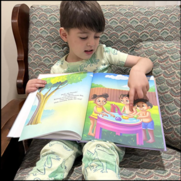


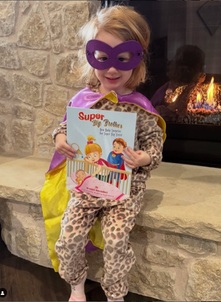
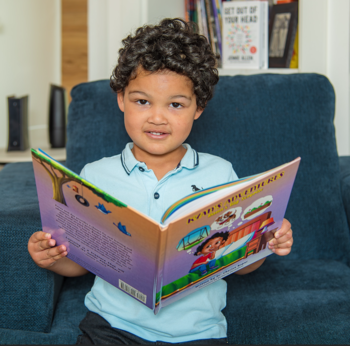
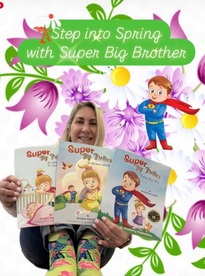


Illustration quality directly influences how a child experiences and progresses through a book. For young readers, reading is not just about decoding words—it is about understanding meaning, following a sequence, and building confidence. High-quality illustrations support each of these stages, while poor-quality visuals can interrupt learning and create confusion.
At the beginning of the reading journey, children rely heavily on images to understand what is happening in the story. Clear and well-structured illustrations help them predict actions, recognize characters, and connect events. If illustrations are unclear, inconsistent, or unrelated to the text, children may struggle to follow the story even if the writing is simple.
As children begin to recognize words, illustration quality continues to play a role by reinforcing meaning. When a word and image match accurately, the child builds a stronger connection between language and visual understanding. This repeated reinforcement improves both vocabulary and comprehension over time.
Consistency is another key factor. Characters should look the same across all pages, and environments should remain visually stable. Inconsistent illustrations can confuse children, making it harder for them to track the story or understand who is who. This breaks the flow of reading and reduces confidence.
Supports early-stage readers by visually explaining the story before they can fully read the text
Improves comprehension by aligning images closely with the written content
Builds trust in the book, as consistent and clear visuals help children feel secure and oriented
Prevents confusion caused by unclear, overly complex, or mismatched illustrations
Encourages progression from visual reading to text-based reading
Enhances memory retention by combining visual and textual learning
Another important aspect is emotional clarity. High-quality illustrations clearly show facial expressions, actions, and moods. This helps children understand not just what is happening, but how characters feel. Emotional understanding is an important part of reading development, as it helps children connect with stories on a deeper level.
| Illustration Aspect | Low-Quality Illustration Impact | High-Quality Illustration Impact |
|---|---|---|
| Character Consistency | Characters change appearance across pages, causing confusion about identity | Consistent character design helps children easily recognize and follow the story |
| Clarity of Actions | Unclear or cluttered scenes make it difficult to understand what is happening | Clear actions allow children to quickly grasp the story without relying only on text |
| Alignment with Text | Images do not match the written content, leading to misunderstanding | Illustrations reinforce the exact meaning of the text, improving comprehension |
| Visual Simplicity | Overly detailed or busy visuals distract and overwhelm young readers | Focused and simple visuals guide attention to key elements |
| Emotional Expression | Flat or unclear expressions make it hard to understand character feelings | Clear facial expressions and body language help children connect emotionally |
| Page Composition | Poor layout makes it unclear where to look first | Well-structured composition guides the child’s eye naturally across the page |
For authors, this means illustration quality should be treated as a core part of the reading experience, not just decoration. Every visual element should have a purpose—guiding the reader, reinforcing meaning, and supporting learning at each stage.
When illustrations are designed with clarity, consistency, and purpose, they become a powerful tool that helps children move from simply looking at a book to truly reading and understanding it.
Working with professional childrens book illustration services is not just about completing a single book—it is about building a strong foundation for long-term success in children’s publishing. Experienced illustration teams understand how visuals influence learning, engagement, and brand consistency across multiple books.
One of the biggest long-term advantages is consistency. Professional illustrators maintain uniform character design, color schemes, and visual storytelling throughout the book. This consistency helps children recognize patterns, follow stories easily, and build familiarity with characters, which is essential for early literacy development.
Another key factor is quality control. Professional teams follow structured workflows that include sketching, revisions, and final refinements. This ensures that every illustration serves a purpose—supporting the text, guiding attention, and improving comprehension. Over time, this level of quality builds trust with readers, parents, and educators.
Professional illustration services also understand how to design with scalability in mind. If an author plans to create a series, merchandise, or educational materials, consistent and well-developed illustrations can be reused and adapted. This makes it easier to expand the brand without starting from scratch for each new project.
Ensures long-term consistency in characters and visual storytelling across multiple books
Improves educational value by aligning illustrations with early literacy and comprehension goals
Builds a recognizable visual identity, making books more memorable for young readers
Reduces rework and errors through structured workflows and professional processes
Supports future expansion into book series, educational content, and merchandise
Ensures print-ready and platform-ready files for smooth Amazon publishing
From a learning perspective, professional illustrators know how to balance creativity with clarity. They avoid overly complex visuals that may confuse children and instead focus on designs that guide understanding. This balance is critical for creating books that are not only visually appealing but also developmentally appropriate.
| Aspect | Non-Professional Approach | Professional Illustration Services |
|---|---|---|
| Consistency | Variations in characters and style across pages | Uniform design that supports recognition and learning |
| Educational Value | Focus on visuals without learning support | Illustrations designed to improve comprehension and literacy |
| Scalability | Difficult to expand into series or products | Easy adaptation for sequels, branding, and merchandise |
| Technical Quality | Risk of formatting and print issues | Print-ready, platform-compliant files |
For authors, this means that investing in professional childrens book illustration services is not just a short-term expense—it is a strategic decision. High-quality illustrations continue to deliver value long after the book is published by improving reader experience, supporting learning, and enabling future growth.
In the long run, professionally illustrated books stand out in the market, perform better with readers, and create opportunities for expansion, making them a more sustainable and impactful choice.
Early literacy is shaped by how easily a child can connect with a book, and illustrations play a central role in making that connection possible. For young readers, visuals are not an addition to the story—they are a primary way of understanding it. The right illustrations guide attention, explain meaning, and help children move from simply looking at pages to actively reading and interpreting them.
Throughout the reading journey, well-designed illustrations reduce confusion, support vocabulary development, and build confidence. They allow children to engage with stories independently, even before they become fluent readers. This early sense of success is what encourages consistent reading habits and long-term interest in books.
For authors, this means every illustration should have a clear purpose. It should support the text, simplify understanding, and align with the child’s learning stage. Books that achieve this balance are not only more engaging but also more effective in supporting early literacy development.
Working with professional childrens book illustration services ensures that this balance is maintained. From concept to final design, experienced illustrators create visuals that are consistent, meaningful, and aligned with both storytelling and learning goals.
In the end, a well-illustrated book does more than tell a story—it creates an experience that helps children understand, imagine, and grow. These are the books that children return to, learn from, and remember long after the last page is turned.
To explore more self publishing tips and resources that can guide you in writing, designing, and publishing your book, click on this link.
Click here to visit our Home Page.
Click here to view the portfolio of children’s book illustrations by Blueberry Illustrations: https://blueberryillustrations.com/childrens-book-illustrationsClick here to explore affordable publishing packages offered by Blueberry Illustrations: https://blueberryillustrations.com/affordable-publishing-packagesClick here to read author testimonials and reviews of Blueberry Illustrations: https://blueberryillustrations.com/book-reviewClick here to view the Amazon book store featuring books published by Blueberry Illustrations: https://blueberryillustrations.com/book-storeClick here to watch videos showcasing Blueberry Illustrations’ publishing and illustration work: https://blueberryillustrations.com/videos