Our Happy
Authors


What Authors Should Compare Before Choosing an Illustration Company
Two book illustration companies can quote very different prices for the same project, but the difference between them is not always the quality of the artwork. Pricing can also reflect the amount of character development, art direction, revision support, communication, project management, quality control, and final deliverables included in the service.
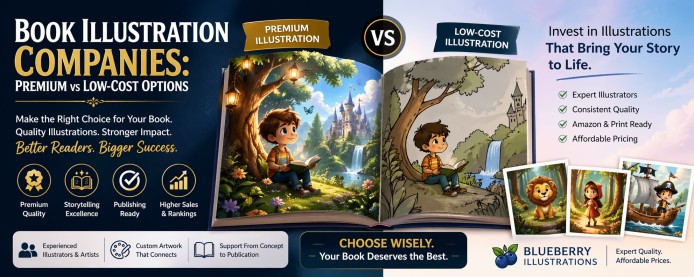
This is why comparing book illustration companies by price alone can be misleading. A lower-cost company may produce professional, consistent illustrations through an efficient workflow, while a premium company may charge more because it provides specialised artwork, more extensive creative development, or a higher level of project support. At the same time, a higher quotation does not automatically guarantee better illustrations.
For authors, the important question is therefore not simply whether a book illustration company is premium or affordable, but what you actually receive for the price. This guide compares premium and low-cost book illustration companies across the factors that matter most in a complete book project—from character consistency and visual storytelling to revisions, communication, rights, deliverables, and reliability—so you can understand where paying more may add value and where a lower-cost option may be equally suitable.
One difference authors may encounter when comparing book illustration companies is the amount of visual storytelling included in the creative process. Producing an attractive individual illustration is not the same as developing a sequence of images that works across an entire book.
In a well-planned picture book, illustrations have different jobs from page to page. One scene may establish a setting, another may reveal an emotion, another may create anticipation, and a page turn may be used to introduce a surprise. The illustrations should also add information, expression, or atmosphere rather than simply repeating what the text already says.
When comparing illustration companies, authors can look for evidence of:
More expensive illustration services may include additional time for manuscript interpretation, scene planning, storyboarding, or art direction. However, these capabilities are not exclusive to premium companies. An affordable book illustration company with strong experience in complete picture books may already incorporate visual storytelling into an efficient standard workflow.
When two book illustration companies provide very different quotations for the same manuscript, the difference is not necessarily explained by artistic quality alone. Illustration companies can have very different creative processes, team structures, levels of author support, and project deliverables. Understanding these differences makes it easier to determine whether a higher quotation provides additional value or simply reflects a different business model.
Some of the most important factors behind the difference between premium and lower-cost illustration companies include:
For this reason, authors should avoid comparing two illustration quotations by the final figure alone. The more meaningful comparison is whether both companies are offering the same creative process, revision support, project management, rights, deliverables, and level of involvement.
The terms “premium” and “low-cost” describe pricing positions, but they do not guarantee a particular level of quality. Two companies at very different price points may both produce professional work, while differing significantly in their process, level of support, specialisation, and what is included in the quotation.
The table below shows how service models may differ between more affordable and premium book illustration companies. These are not differences in quality levels. An affordable company may provide many of the same services through a more efficient workflow, while a premium company may charge more for additional creative development, specialist expertise, consultation, or a different business model.
| What to Compare | Lower-Cost Illustration Company | Premium Illustration Company |
|---|---|---|
| Creative process | May use a streamlined process with fewer preliminary development stages. | May include more extensive concept development, art direction, and pre-production planning. |
| Character development | May develop characters through a smaller number of concepts and approvals. | May provide broader character exploration, including additional poses, expressions, or design alternatives. |
| Author involvement | May rely on clearly defined approval stages and consolidated feedback. | May provide more consultation and interaction throughout the creative process. |
| Revision process | May include a defined or more limited number of revision rounds. | May provide a more extensive revision process or additional review stages. |
| Project management | May use a simpler workflow with direct communication between the author and illustrator or project coordinator. | May include dedicated project management, art direction, or additional internal coordination. |
| Specialised artwork | Can be an excellent option when the required style and project complexity fit the company's existing expertise. | May offer greater access to highly specialised illustrators or particularly complex artistic techniques. |
| Quality control | May use a smaller team or streamlined internal review process. | May include additional art-direction and quality-control stages before final delivery. |
| Final deliverables | May provide the finished files required for the agreed project, with additional file types handled separately. | May include a broader range of deliverables or production assets within the quotation. |
| Communication | May use fewer scheduled consultations and a more structured feedback process. | May provide more frequent consultations, updates, and individual project support. |
| Overall value | Can provide excellent value when an efficient workflow delivers the artwork and support the book actually requires. | Can provide additional value when the project genuinely benefits from greater specialisation, creative development, or hands-on support. |
This is also why authors should request sufficiently detailed quotations before making a decision. If one company appears substantially cheaper, determine whether it has achieved that price through an efficient production model or whether important parts of the service are simply not included. Similarly, when a company charges substantially more, identify exactly what additional expertise, support, or deliverables the higher price provides.
A lower-cost book illustration company can be the better choice when it provides the artistic quality, reliability, and level of support your particular book requires. Paying more does not automatically improve the finished book if the additional services included in a premium quotation are unnecessary for your project.
An affordable illustration company may be especially suitable when:
The strongest value therefore comes from finding the appropriate level of service for the project rather than automatically choosing either the cheapest or the most expensive quotation. If a lower-cost book illustration company can demonstrate professional work and provide everything your book requires, paying substantially more may not produce a meaningful advantage.
Choosing an affordable illustration company is only one way to control the cost of a book. The scope and planning of the project can have an equally important effect on the final budget. In many cases, meaningful savings come from reducing unnecessary production work rather than lowering the professional standard of the illustrations.
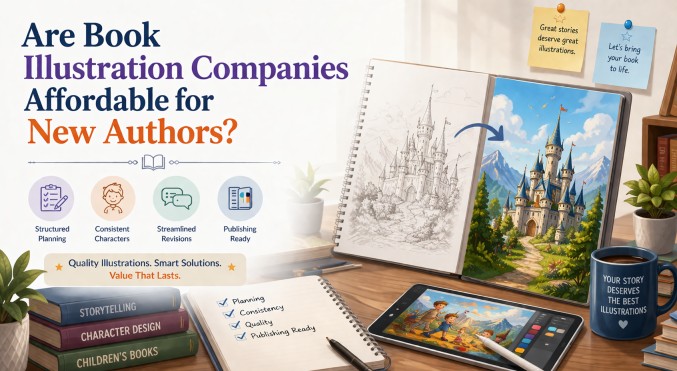
Authors can keep illustration costs more manageable by:
These decisions can reduce repeated work while preserving the illustrations that contribute most to the story. For an author working within a limited budget, controlling the scope of the project can sometimes produce better results than simply selecting the company with the lowest quotation.
For some books, reducing the illustration scope can be more sensible than choosing a provider solely because of a lower rate. A limited budget might be better concentrated on fewer, stronger illustrations rather than spread across a large number of complex scenes that cannot be produced to the desired standard.
This approach can work particularly well when some pages can be text-led, spot illustrations can replace full-page scenes, backgrounds can remain relatively simple, or the story uses a small number of recurring characters and settings. The objective is not to remove artwork the story needs, but to direct the available budget toward the illustrations that contribute most to the finished book.
A premium book illustration company may be worth the additional investment when the project requires expertise, creative development, or support that a more streamlined service does not provide. The important question is not whether the company charges more, but whether the additional services included in the quotation are genuinely useful for your book.
Paying more may make sense in the following situations:
Authors should therefore ask a premium book illustration company to explain what distinguishes its service from a less expensive alternative. If the additional cost corresponds to expertise or support that the project genuinely requires, paying more can be worthwhile. If both companies offer comparable artwork, processes, rights, revisions, and deliverables, the higher quotation may provide little practical advantage.
Two illustration quotations can show very different totals while covering very different amounts of work. Before deciding that one company is expensive and another is affordable, authors should make sure they are comparing the same scope of service.
When reviewing two book illustration company quotes, compare the following points side by side:
| What to Check | Questions to Ask |
|---|---|
| Number and type of illustrations | Are both companies quoting for the same number of illustrations, spreads, pages, characters, and level of scene complexity? |
| Character development | Is character design included before the book illustrations begin? How many characters need to be developed? |
| Sketch stage | Will you see and approve sketches before the illustrations are completed? |
| Revisions | How many revision rounds are included, at what stages can changes be requested, and when do additional charges begin? |
| Art direction | Will the company help interpret the manuscript visually and plan scenes, or are you expected to provide detailed illustration directions? |
| Character consistency | Does the company have a process for checking recurring characters, clothing, proportions, environments, and other details across the entire book? |
| Communication | Who will communicate with you during the project, how is feedback submitted, and how frequently will you receive progress updates? |
| Project schedule | Does the quotation include an estimated production schedule and clear approval stages? |
| Final artwork | What file formats, dimensions, resolution, and final artwork are included when the project is completed? |
| Usage rights | What rights are granted for using the illustrations in the book, promotion, future editions, or other agreed uses? |
| Additional charges | Which situations can increase the original quotation, such as additional characters, major changes after approval, extra revisions, or an expanded project scope? |
Authors should also examine completed book projects rather than relying only on a few attractive portfolio images. A complete book reveals whether a company can maintain character consistency, visual continuity, storytelling quality, and an appropriate illustration style across many pages.
Once the scope of both quotations is clear, the decision becomes much easier. The better value is not necessarily the company with the lowest or highest price, but the one that provides the artwork, process, support, rights, and deliverables your particular project requires.
A company's price can also reflect factors that are largely independent of the artwork itself. Location, operating costs, studio overhead, team structure, reputation, demand, and market positioning can all influence a quotation. An efficient illustration company operating with lower overhead may therefore charge less while producing work of a comparable professional standard, while a highly recognized studio may command higher prices because of its reputation, specialist expertise, or demand.
Business models can also affect pricing. Some book illustration companies compete through efficient production systems, lower overheads, or a larger volume of projects, while others position themselves as boutique or premium studios offering more intensive creative involvement. These differences can influence the final quotation without necessarily indicating a corresponding difference in the quality of the finished illustrations.
Art direction is one area where a higher illustration quotation may include work that is not immediately visible when authors compare portfolios. It is not another illustration style or simply an additional person reviewing the artwork. Art direction helps establish the visual rules that keep an entire book coherent.
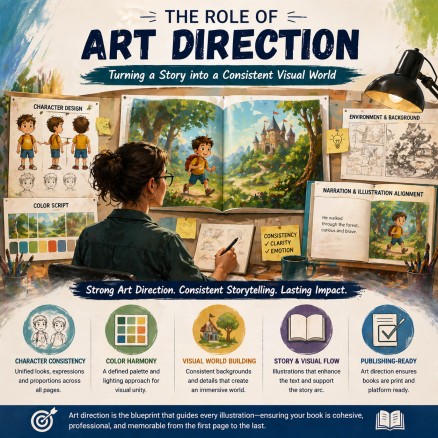
Depending on the company and the complexity of the project, additional art direction may involve:
The value of this additional art direction depends heavily on the project. A visually complex picture book, a large cast of recurring characters, an unusual fictional world, or a series intended to maintain the same visual identity across several books may benefit considerably from more extensive art direction.
A simpler project may not require the same level of involvement. An experienced lower-cost illustration company may already use character references, consistency checks, and established visual guidelines as part of its normal workflow, making a separate premium art-direction service unnecessary.
The best book illustration company is not necessarily the most expensive or the least expensive. It is the company that can demonstrate the artistic quality your book needs, maintain consistency across a complete project, provide a clear creative and revision process, and explain exactly what is included in the quotation.
Premium pricing can be worthwhile when a book genuinely requires specialised artwork, extensive creative development, additional art direction, or intensive project support. An affordable illustration company can be equally suitable when it combines experienced illustrators, an efficient workflow, strong visual storytelling, clear approvals, and professional-quality finished artwork.
Rather than using price as a shortcut for judging quality, compare portfolios, complete book projects, processes, rights, deliverables, communication, and the level of support your particular project requires. The goal is not to pay the highest price—it is to receive the right combination of quality, service, and value for your book.
Blueberry Illustrations provides custom book illustration services for authors who want professional artwork without assuming that higher prices automatically mean better results. Our process includes character development, sketch approvals, revisions, consistent artwork across the book, and clear communication throughout the illustration process.
Whether you are illustrating your first children’s book or developing a complete series, you can review our illustration services, portfolio, process, and pricing before deciding whether we are the right fit for your project.
