Our Happy
Authors


Organic Strategies to Help More Readers Discover and Buy Your Book
Publishing a book on Amazon is only the beginning. The bigger challenge is getting the book discovered by the right readers, clicked in search results, and ultimately purchased. With thousands of competing titles available across Amazon, simply making a book available for sale does not guarantee visibility or sales.
Many authors experience the same problem after publication: their book is live, but impressions are limited, clicks are low, or visitors reach the book page without buying. This does not necessarily mean the book itself is the problem. Often, the issue lies in how effectively the book competes for visibility and converts reader interest into a purchase.
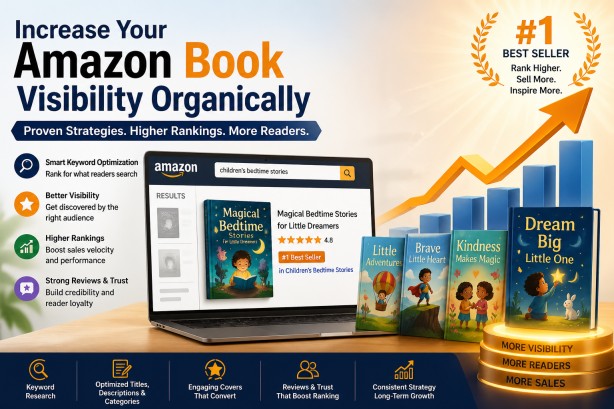
Amazon works as both a search marketplace and a competitive storefront. A reader may discover a book through a search term, category, recommendation, or external source, but visibility alone is not enough. Once the book appears, its title, cover, description, reviews, price, and overall listing must give the reader a reason to click and buy.
This creates an important connection between Amazon book visibility and Amazon book sales. Relevant keywords and categories can help a book appear for appropriate searches, while stronger presentation and positioning can help turn those impressions into clicks and purchases. Sales and reader engagement can then contribute to continued marketplace exposure.
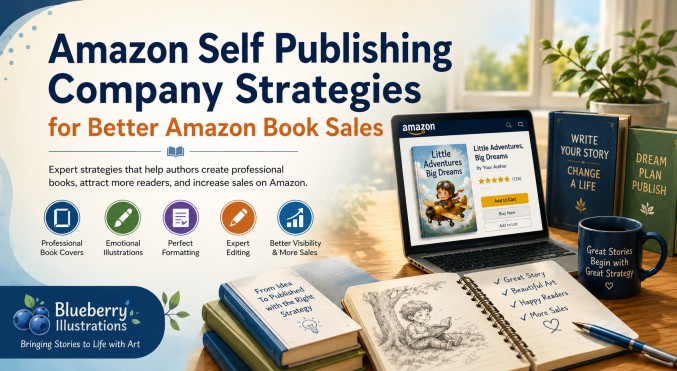
For authors trying to improve performance on Amazon, the goal should therefore not be visibility in isolation. The stronger approach is to improve the entire path from discovery to click to purchase.
This guide focuses specifically on how to increase Amazon book visibility, improve discoverability and rankings, attract more qualified clicks, strengthen conversion, and support book sales. It covers Amazon-focused strategies such as reader-intent keywords, categories, metadata, book-page optimization, reviews, pricing, conversion signals, and relevant traffic that can help more potential readers find and buy your book.
Increasing Amazon book sales starts with visibility, but being visible does not automatically mean a book will sell. A successful Amazon listing must move readers through several steps: the book needs to appear in relevant places, attract attention, earn the click, and then give the reader enough confidence to make a purchase.
A useful way to understand this is as a simple Amazon book sales funnel:
This distinction is important because a book can struggle at different points in the funnel. A book receiving very few impressions may have a discoverability problem. A book receiving impressions but few clicks may need stronger positioning or presentation. A book receiving clicks but few purchases may have a conversion problem.
The goal is therefore not simply to attract the largest possible number of visitors. The book needs to appear in front of readers who are genuinely interested in its subject, genre, age group, or theme.
For example, highly relevant keywords may produce fewer impressions than very broad search terms but can attract readers who are much more likely to consider buying the book. In the same way, a strong cover may help earn the click, but the description, reviews, preview, and price still influence what happens after the reader reaches the listing.
Improving Amazon book sales therefore requires attention to both sides of the equation: helping the right readers discover the book and improving the likelihood that those readers will buy it once they find it.
When a reader searches for a book on Amazon, not every relevant title receives the same visibility. Amazon must decide which books are most appropriate for that search and how prominently they should appear. For authors, this means that improving visibility involves more than simply adding a few popular keywords.
A book's discoverability can be influenced by a combination of relevance, metadata, sales performance, customer response, and how well the listing matches what readers are looking for. These signals work together, so improving only one element may not be enough to produce stronger visibility.
Search RelevanceAmazon needs to understand what your book is about and which searches it is relevant to. Information such as the title, subtitle, keywords, categories, and other book metadata helps establish that relevance.
This is why highly specific terms that accurately describe the book can be more useful than broad phrases that attract readers with a different intent.
Sales and ConversionVisibility becomes more valuable when it leads to purchases. If readers discover a book, visit its product page, and decide to buy it, that provides stronger evidence of reader interest than impressions alone.
Authors should therefore think beyond ranking for keywords. The objective is to appear for relevant searches and then give those readers a compelling reason to choose the book.
Book Metadata and CategoriesAccurate metadata helps Amazon understand where a book belongs. Relevant categories and descriptive information can improve the connection between the book and readers searching or browsing for that type of title.
Choosing categories or keywords simply because they appear less competitive can be counterproductive if they do not accurately represent the book. Relevance should remain the priority.
Reader ResponseReviews, ratings, and other forms of reader response can influence how potential buyers evaluate a book once they discover it. A book that appears prominently but fails to earn reader confidence may still struggle to generate sales.
This is why Amazon visibility should be treated as part of a larger system. Search relevance helps readers find the book, presentation helps earn the click, and a convincing product page helps turn that interest into a purchase.
Amazon keyword research should focus on reader search intent. The goal is to identify the words and phrases potential readers may use when searching Amazon for a book like yours, rather than terms authors use when researching publishing itself.
Useful search terms often describe the book’s subject, audience, age range, genre, theme, or purpose. Choosing keywords that accurately match the book can help Amazon understand its relevance to particular searches and help the right readers discover it.
Specific keywords can be particularly useful because they describe reader intent more precisely. A broad phrase such as “children’s book” can represent many different needs, while a more descriptive phrase can connect the book with readers searching for a particular type of story.
Start by considering how a reader would describe the book rather than how you would describe the publishing project. Amazon search suggestions can provide ideas for related searches, while comparable books can help reveal the language commonly used within the book’s category or subject area.
You can also look for recurring words and phrases readers use when discussing similar books. The objective is not to copy another book’s metadata, but to understand how readers describe the subject, audience, themes, and benefits they are looking for.
A keyword is useful only when it accurately represents the book. Broad or loosely related phrases may expose the listing to readers who are unlikely to be interested in it, while more relevant terms can connect the book with a better-matched audience.
Once you have identified relevant search terms, they can inform appropriate parts of your Amazon book metadata. Avoid forcing the same phrase repeatedly into the listing. Titles and descriptions should remain clear, natural, and useful to readers.
The purpose of Amazon keyword optimization is therefore not simply to appear for more searches. It is to improve book discoverability for searches that closely match what the book actually offers, creating a stronger path from search visibility to clicks and potential sales.
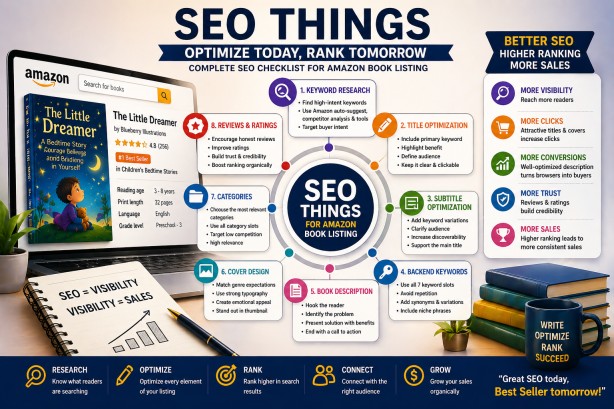
Your book title and subtitle are important parts of how readers understand a book when they encounter it on Amazon. They can communicate the book’s subject, theme, audience, or benefit and help readers quickly decide whether the title is relevant to what they are looking for.
For authors, the challenge is to balance search relevance with a natural, appealing title. A title should first represent the actual book. Relevant descriptive language can then be used where it genuinely belongs rather than adding keywords simply to attract additional searches.
For example, a creative title such as Tommy the Turtle establishes the identity of the story but provides little context on its own. A relevant subtitle could provide additional information about the theme or intended audience without turning the title into a list of search terms.
When the main title is creative or does not fully explain the book, the subtitle can provide additional context. Depending on the book, this might include its subject, theme, audience, or another meaningful description that helps potential readers understand what it offers.
For example, instead of changing a distinctive story title simply to accommodate search terms, an author may be able to use the subtitle to communicate additional relevant information while preserving the identity of the book.
Adding several search phrases to a title does not automatically make a book more competitive. An overloaded title can become difficult to read and may make the listing appear less professional to potential buyers.
The better objective is alignment: the title, subtitle, cover, description, categories, and other metadata should consistently communicate what the book is and who it is for. This makes it easier for relevant readers to recognize the book when they encounter it in Amazon search or browse results.
Think of the title and subtitle as part of the path from Amazon visibility to reader interest. Search optimization can help with discovery, but the wording must also make sense to the person deciding whether to click on the book.
Amazon KDP allows authors to enter keyword information that is not displayed as part of the visible book title or description. These backend keywords provide additional information about the book and can help Amazon connect it with relevant reader searches.
The objective is not to fill the keyword fields with as many terms as possible. Instead, use them to provide relevant search language that accurately describes the book, particularly useful terms that are not already communicated clearly elsewhere in the listing.
Think about the phrases a potential buyer might use when searching for a book like yours. Depending on the book, these could describe its subject, theme, intended audience, genre, setting, or purpose.
For example, a children’s story about kindness might have relevant search concepts related to friendship, empathy, sharing, or age-appropriate social-emotional stories. The terms you choose should always accurately reflect the actual content of the book.
Backend keyword fields can be used to introduce additional relevant search concepts rather than repeatedly entering the same words and phrases. If important information is already clearly represented in your title or subtitle, consider whether the keyword fields can provide other accurate ways readers might search for the book.
A collection of broad words may describe many different books without clearly identifying yours. More specific phrases can provide better context about what a potential reader is actually looking for.
For example, a phrase describing the book’s audience and theme may be more useful than an unrelated high-traffic term chosen simply because it receives searches.
Avoid keywords that inaccurately describe the book or attempt to attract readers looking for something different. Competitor names, unrelated subjects, misleading claims, and other inappropriate terms should not be used simply to gain additional exposure.
Your visible title, subtitle, categories, description, and backend keywords should work together to communicate what the book is about. The goal is not to repeat the same phrase everywhere, but to give Amazon and potential readers clear and consistent information about the book.
Backend keyword optimization is therefore best viewed as an extension of your broader Amazon book discoverability strategy. Well-chosen terms can strengthen search relevance without turning the visible book listing into keyword-heavy copy.
Amazon categories help place your book alongside other titles covering similar subjects, genres, or reader interests. Choosing categories that accurately represent the book can improve its chances of being discovered by readers browsing for that type of content.
The goal should not simply be to find the least competitive category. A category is valuable when it is both relevant to the book and useful for reaching the right readers. Placing a book in an unrelated category may create poor audience alignment even if that category appears easier to compete in.
Start with categories that closely describe what the book actually is. Consider its genre, subject, intended audience, themes, and the types of books readers would reasonably expect to find beside it.
For example, a children’s picture book about friendship should be categorized according to its actual content and audience rather than placed in a loosely related category simply because fewer books appear there.
When several relevant category options are available, it can be useful to compare how competitive they are. A highly relevant category in which the book can realistically compete may provide better positioning than an extremely broad category containing a large number of established titles.
However, competition should be a secondary consideration. Reader relevance comes first. The purpose of category selection is to help the book appear in places where interested readers are likely to browse.
Compare Competition Within Relevant CategoriesOnce you have identified categories that genuinely fit your book, compare the books currently performing within those categories. This can help you understand the competitive environment your book will enter.
Look at factors such as the types of books appearing prominently, their pricing, reader reviews, cover presentation, publication history, and how closely they match your book. The purpose is not to find an unrelated category simply because it appears easier to compete in, but to choose intelligently among the relevant category options available to your book.
For example, if several categories accurately describe your book, a more specific category may place it alongside titles serving a more closely matched audience. That can provide more useful exposure than appearing within an extremely broad category containing many different types of books.
More specific categories can sometimes provide a clearer connection between a book and its intended audience. Broad categories may contain books covering many different subjects, while a narrower relevant category can place the title among more closely related books.
This does not mean authors should always choose the narrowest available option. The category must still accurately describe the book.
Your categories should reinforce the same positioning communicated by your title, subtitle, keywords, and description. If these elements describe the book in very different ways, its overall positioning becomes less clear.
For stronger Amazon book discoverability, think of categories and keywords as complementary signals: keywords help connect the book with relevant searches, while categories help position it within relevant browsing areas.
A strong story matters, but readers cannot evaluate the story until they first decide to explore the book. On Amazon, potential buyers often encounter the cover, title, price, ratings, and other listing information before they read a sample or learn much about the content.
This means a book can achieve search visibility and still struggle to generate sales. Once the book appears in front of a relevant reader, its presentation must create enough interest and confidence to earn the next step.
Readers may quickly consider questions such as:
This is the difference between visibility and conversion. Visibility creates the opportunity to be discovered; presentation helps turn that opportunity into clicks and potential sales.
Once your book appears in Amazon search results, category pages, or recommendations, the next challenge is getting the right reader to notice and click it. The book cover plays an important role at this stage because it is one of the first elements shoppers see when comparing competing titles.
An effective Amazon book cover should do more than look attractive at full size. It should remain clear at thumbnail size, communicate the type of book being offered, and help potential readers quickly decide whether the book is relevant to them.
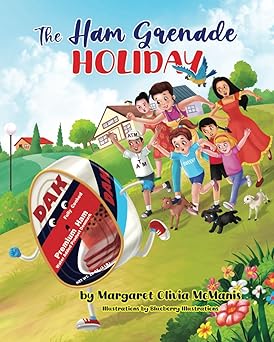
This is particularly important in an online marketplace. In a physical bookstore, a reader can pick up a book, examine the cover, and browse through the pages before deciding whether to explore it further. On Amazon, a book may first appear as a small thumbnail beside many competing titles. The cover therefore needs to communicate clearly even at a reduced size and give the right reader a reason to take a closer look.
The objective is not simply to make as many Amazon shoppers as possible click the book. A more valuable click comes from a reader who recognizes the book as relevant to what they want and is therefore more likely to consider purchasing it.
This is where discoverability and presentation begin to work together. Keywords and categories can help the book appear in relevant places, while the cover can help turn that visibility into reader interest. Once the reader reaches the product page, other elements—including the description, reviews, preview, and price—become increasingly important in the purchase decision.
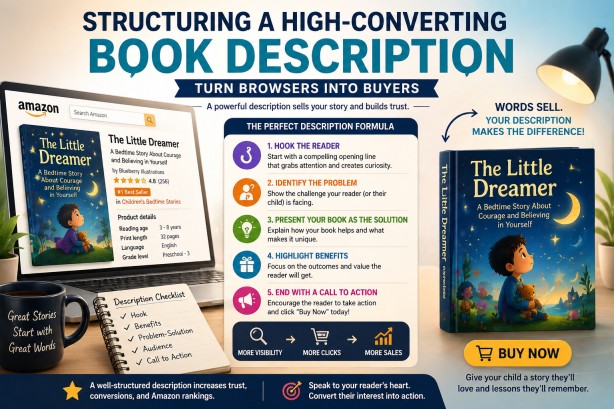
Once a reader clicks through to your Amazon book page, the description has a different job from your keywords and categories. Instead of simply helping with discovery, it should help the potential buyer understand what the book offers, who it is for, and why it may be worth purchasing.
A book description should therefore be more than a basic summary of the contents. It should provide enough relevant information to help an interested reader decide whether the book matches what they were looking for.
The opening should quickly communicate the central appeal of the book. Depending on the title, this might be an intriguing story premise, an important theme, a useful outcome, or a question that reflects what the intended reader is looking for.
Avoid spending the opening paragraphs on background information about the author or publishing journey. A potential buyer should be able to understand the book’s main appeal quickly.
After the opening, give readers enough information to understand the content without revealing everything. For fiction, this may include the central character, situation, conflict, or theme. For nonfiction, it may explain the subjects covered, problems addressed, or information the reader will gain.
When relevant, the description should make it easy to understand who the book is intended for. Age range, reading level, subject interest, genre, or intended use can provide useful context and help reduce uncertainty before purchase.
If the book provides a particular benefit, learning experience, entertainment value, or practical information, explain it accurately. Avoid exaggerated promises that the book cannot reasonably guarantee.
For example, describing a book as exploring kindness or helping children understand friendship is more defensible than promising that it will change a child’s behavior or solve a specific problem.
Potential buyers may scan a product page rather than read every word immediately. Short paragraphs, clear organization, and selective use of bullet points can make important information easier to identify.
How the description is presented can affect how easily potential buyers understand it. Large blocks of uninterrupted text can make important information difficult to find, especially when readers are quickly evaluating several books.
Use short paragraphs, clear spacing, and simple formatting to make the description easier to scan. Where supported by Amazon, selective emphasis and lists can help organize important information without making the product page look cluttered or overly promotional.
The opening lines deserve particular attention because they should quickly establish what makes the book relevant or interesting. Rather than filling this space with general background information, use it to introduce the book's strongest selling point, premise, theme, or reader benefit.
Formatting should ultimately serve the reader. The easier it is for a potential buyer to understand what the book is, who it is for, and why it may interest them, the easier it becomes for that reader to make a purchase decision.
The description should reinforce the positioning established by your title, subtitle, keywords, categories, and cover. If a reader discovers the book through a particular theme or subject, the product page should make it clear that the book genuinely addresses that interest.
This consistency is important because discoverability brings the reader to the listing, while the product page helps the reader decide whether to buy.
A description can finish with a concise invitation to read or purchase the book, but the call to action does not need to be aggressive. By this point, the description should already have given the reader the information needed to make an informed decision.
The objective is not simply to make the description sound promotional. A strong Amazon book description reduces uncertainty, reinforces relevance, and helps turn qualified product-page visits into potential sales.
An Amazon Bestseller badge can give a book additional prominence and may help attract attention from shoppers. However, authors should treat the badge as a result of strong sales performance within a relevant Amazon category, rather than as the primary objective of their visibility strategy.
Amazon bestseller rankings are relative to other books within their respective categories and can change as sales activity changes. This means a book does not necessarily need to compete with every title on Amazon; its position depends on its performance relative to other books in the category in which it is ranked.
For authors trying to improve their chances of reaching a strong category position, the fundamentals we have already discussed remain important:
A less competitive category may appear attractive because reaching a high position could be easier, but category relevance should come first. Placing a book where it does not genuinely belong can expose it to the wrong audience and weaken the connection between visibility and actual buyer interest.
A bestseller badge can provide useful social proof when a book earns one, but sustainable Amazon book visibility depends on more than temporarily reaching a category position. The stronger long-term objective is to build relevant discoverability, qualified traffic, reader confidence, and consistent sales.
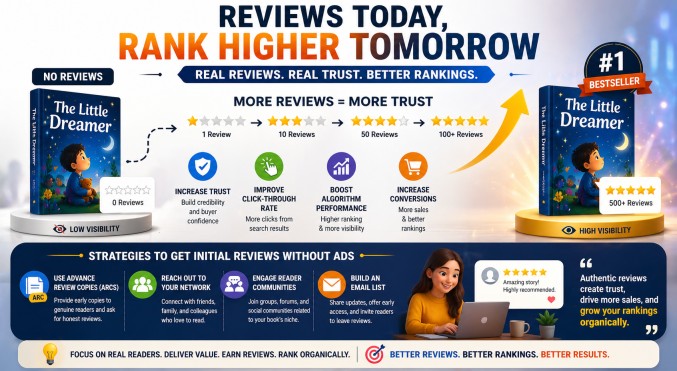
Reviews and ratings can influence how potential buyers evaluate a book once they discover it on Amazon. A reader comparing several similar titles may consider the star rating, number of reviews, and experiences shared by previous readers before deciding which book to explore or purchase.
This makes reviews particularly important at the conversion stage of Amazon book visibility. Keywords and categories may help a book get discovered, while reviews can provide additional confidence when a shopper is deciding whether the book is worth buying.
Authors should focus on obtaining legitimate reader feedback rather than trying to reach an arbitrary review count. A smaller number of authentic reviews can still provide useful information and credibility to potential buyers.
Amazon has policies governing customer reviews, including restrictions on attempts to manipulate ratings or obtain reviews in ways that create conflicts of interest. Authors should therefore use legitimate methods of encouraging reader feedback and avoid purchasing reviews or attempting to influence what reviewers say.
Encourage Genuine Reader ReviewsAuthors can encourage readers to share honest feedback, but review generation should always follow Amazon's current customer review policies. The objective is to receive genuine opinions from real readers rather than manufacture a particular rating or review count.
Simple opportunities for encouraging legitimate feedback include:
The purpose of encouraging reviews is to build an authentic record of reader experiences. Genuine feedback can help future shoppers evaluate the book and decide whether it is right for them.
Reviews should not be treated as a substitute for relevant keywords, accurate categories, or a well-positioned book listing. Their strongest role is further along the sales path, after a potential reader has already encountered the book.
Think of the relationship this way: search optimization can help create visibility, the cover and title can help earn attention, and reviews can help provide the confidence needed to move closer to a purchase.
For that reason, building genuine reader feedback should be part of a broader Amazon book sales strategy rather than an isolated attempt to improve rankings.
Once a potential buyer reaches your Amazon book page, the available book preview can help them decide whether the book is right for them. The cover and description create expectations, while the preview gives readers an opportunity to experience the actual writing, illustrations, formatting, and overall presentation before purchasing.
This makes the preview particularly important for conversion. A strong preview can reinforce the promise made by the cover and description, while a weak opening, confusing layout, or inconsistent artwork may create hesitation at an important stage of the buying decision.
For children's books in particular, the preview can help parents, teachers, grandparents, and other buyers evaluate whether the illustrations, reading level, tone, and presentation are appropriate for the intended child.
Think of the preview as part of the path from visibility to purchase. Keywords and categories can help a book get discovered, the cover can help earn the click, the description and reviews can build interest and confidence, and the preview can give potential buyers additional information before they make their final decision.
Price can influence whether a shopper who discovers your book ultimately decides to buy it. Even when the cover, description, reviews, and preview create interest, potential buyers may still compare the price with similar books before making a purchase decision.
The right price is not necessarily the lowest price. It should reflect the book's format, length, production cost, audience, perceived value, and the prices readers commonly encounter among comparable titles.
For illustrated children's books, pricing requires particular care because full-color printing can create substantially different production economics from those of text-heavy books. Authors should therefore consider both what buyers are likely to pay and what the chosen format costs to produce.
Pricing should ultimately support the same goal as the rest of your Amazon listing: attracting the right reader and giving that reader a convincing reason to purchase. Rather than using price as a shortcut to higher rankings, treat it as one part of the overall path from Amazon visibility to sustainable book sales.
Amazon Author Central allows authors to create an author profile and connect their published books in one place. For readers who want to learn more about an unfamiliar author before purchasing, a complete profile can provide useful context and strengthen the overall presentation of the author's books on Amazon.
Keep your Author Central presence accurate and professional:
Author Central should not be treated as a shortcut to higher Amazon search rankings. Its value is primarily in helping interested readers learn more about the author and explore other books connected with that author.
Authors with multiple books can also make it easier for interested readers to discover their wider catalog. Connecting all eligible titles to the correct Amazon author profile helps readers move from one book to other books by the same author.
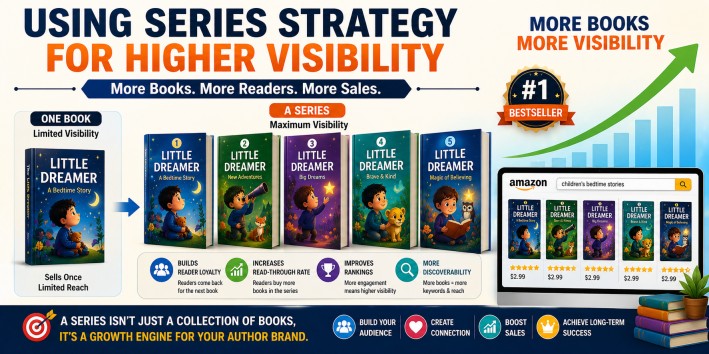
For a series or closely related books, maintaining consistent author information and clearly identifying the relationship between titles can also help readers understand what to read next. The goal is not to manipulate Amazon rankings, but to make it easier for someone who discovers one book to explore other relevant titles from the same author.
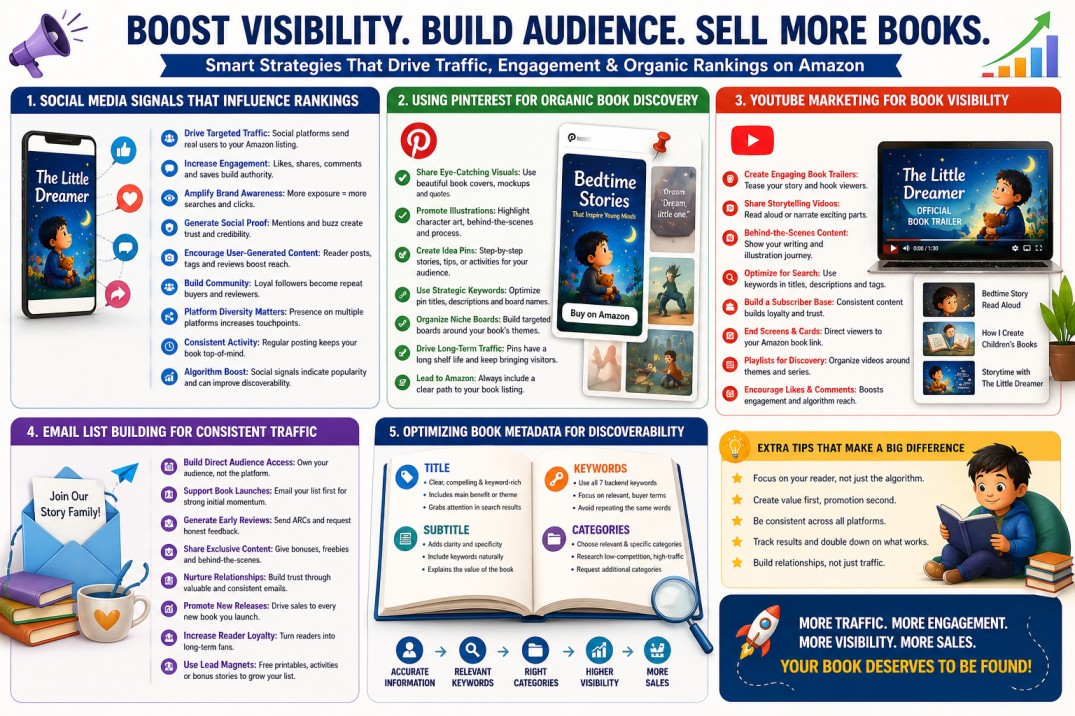
Amazon search is not the only way potential readers can discover your book. Authors can also bring interested readers to an Amazon listing from sources outside Amazon, including their own website, search engines, email audiences, social platforms, media coverage, and other relevant online channels.
The important distinction is between traffic and qualified traffic. Sending large numbers of unrelated visitors to a book page is less useful than attracting people who genuinely match the book's intended audience and may be interested in purchasing it.
External visibility works best when the Amazon listing is already prepared to convert that interest. Before directing readers to the page, make sure the cover, title, description, reviews, preview, price, and other listing information clearly communicate what the book offers.
For this reason, external traffic should be viewed as an additional source of potential buyers rather than a substitute for Amazon listing optimization. The purpose is simple: bring relevant readers to the book and give them a strong, accurate product page on which to make their purchase decision.
Detailed strategies for promoting a book through websites, social media, email, and other channels belong to a broader book marketing plan. On Amazon, the immediate objective is to make sure the traffic reaching your listing has the best possible opportunity to become a sale.
Improving Amazon book visibility is not only about adding more keywords or changing individual listing elements. Authors should also avoid mistakes that make it harder for the right readers to discover, understand, or confidently purchase the book.
The common thread behind these mistakes is relevance. Amazon visibility is most useful when the book appears in front of readers who are genuinely interested in what it offers. Your keywords, categories, cover, description, preview, reviews, and price should therefore work together to create a clear and consistent representation of the book.
How can I increase my book visibility on Amazon?
Amazon book visibility can be improved by using relevant keywords, selecting accurate categories, optimizing metadata, improving the cover and product description, earning legitimate reviews, and attracting relevant external traffic.
How can I improve my Amazon book ranking?
Amazon book rankings can change based on factors including sales activity and how a book performs relative to other titles. Improving search relevance, product-page presentation, pricing, and the quality of traffic reaching the listing can help support stronger Amazon performance.
Do Amazon book keywords improve discoverability?
Relevant keywords can help Amazon understand which searches are appropriate for a book. Choose terms that accurately describe the book's subject, genre, audience, theme, or purpose rather than selecting keywords only because they appear popular.
Can a better book cover help Amazon book sales?
A strong cover can help a book attract attention when it appears in search results or category pages. The most effective cover is not simply attractive; it clearly represents the book and encourages relevant readers to explore the listing.
Can I increase Amazon book visibility without paid ads?
Yes. Authors can work on organic visibility through relevant keywords, accurate categories, strong metadata, an effective product page, genuine reviews, appropriate pricing, and relevant traffic from outside Amazon.
Increasing Amazon book visibility is not about finding one ranking trick. It comes from making it easier for the right readers to discover your book and giving them enough relevant information and confidence to consider purchasing it.
Start with accurate keywords, titles, subtitles, backend search terms, and categories so your book can appear for relevant searches. Then focus on the elements that influence the reader's decision after discovery, including the cover, description, reviews, book preview, and price.
These elements should work together. Greater visibility has limited value if the listing does not attract the right readers, while a strong product page cannot generate many sales if potential buyers rarely discover it.
The goal is therefore to build a clear path from Amazon search visibility to reader interest to purchase, while keeping every part of the listing accurate and relevant to the book.
For broader strategies that take place outside Amazon, including ways to promote a book and reach additional readers, read our book marketing strategies for self-published authors.
Blueberry Illustrations helps authors prepare professionally illustrated and formatted books for publication on Amazon. If your book is still in the production or publishing stage, you can explore our self-publishing services or children's book illustration portfolio.
